🚚 Free Worldwide Shipping on All Orders!Shop Now

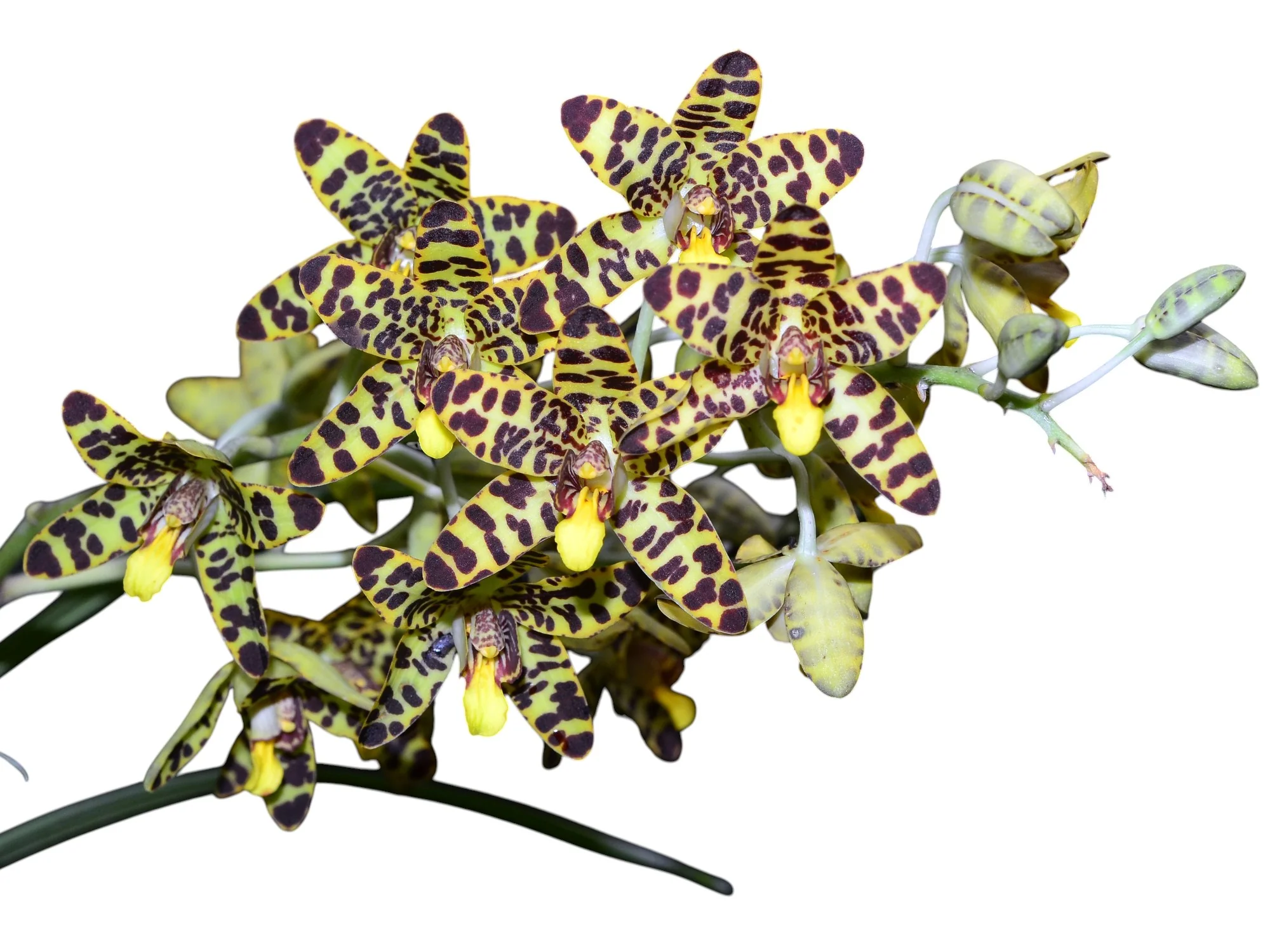
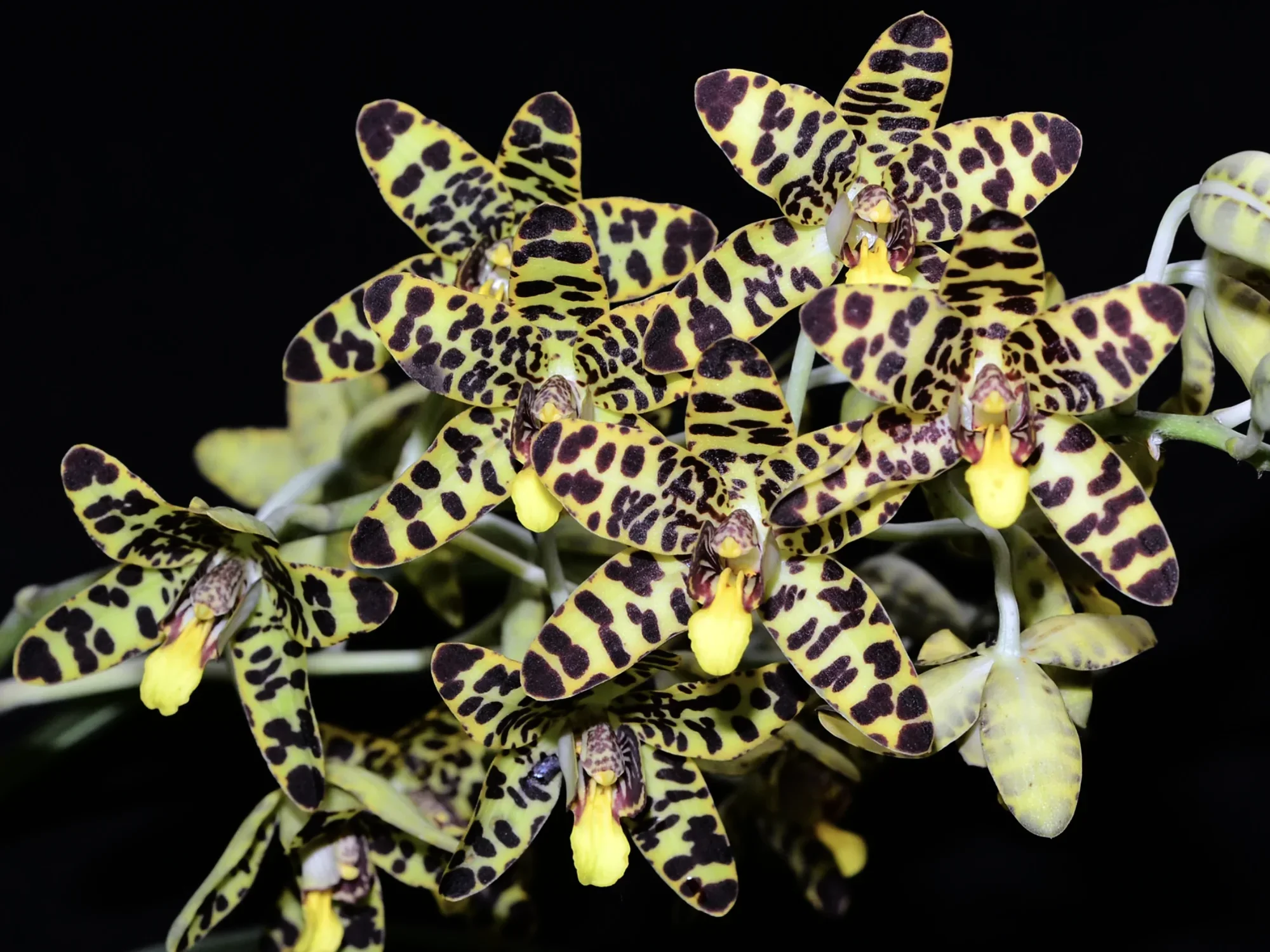
Ansellia africana
Ansellia africana Culture:
Successful cultivation of the impressive Ansellia africana. Here are some important cultural tips to ensure its thriving growth:
- Light: Requires bright, indirect light. It can tolerate some direct sun in the morning or late afternoon, but intense midday sun should be avoided.
- Temperature: This orchid is a warm-growing plant. Daytime temperatures should be between 20-30°C (68-86°F), and nighttime temperatures should not drop below 15°C (59°F).
- Humidity: Ansellia africana prefers humidity, between 50-60%. Humidity can be increased by using humidifiers or water trays.
- Watering: During the active growing season, water generously, allowing the substrate to dry slightly between waterings. In winter, reduce watering frequency.
Additional Notes:
- It is an epiphytic orchid, meaning in its natural habitat it grows on trees.
- It is known as the "leopard orchid" due to the brown spots on its yellow flowers.
- It can grow to a very large size, with multiple stems and flower clusters.
- It is a very resistant orchid that adapts to a wide range of conditions.
- The flowers produce a sweet, pleasant fragrance, especially during the day.
$9.30
Original: $31.00
-70%Ansellia africana—
$31.00
$9.30Product Information
Product Information
Shipping & Returns
Shipping & Returns
Description
Ansellia africana Culture:
Successful cultivation of the impressive Ansellia africana. Here are some important cultural tips to ensure its thriving growth:
- Light: Requires bright, indirect light. It can tolerate some direct sun in the morning or late afternoon, but intense midday sun should be avoided.
- Temperature: This orchid is a warm-growing plant. Daytime temperatures should be between 20-30°C (68-86°F), and nighttime temperatures should not drop below 15°C (59°F).
- Humidity: Ansellia africana prefers humidity, between 50-60%. Humidity can be increased by using humidifiers or water trays.
- Watering: During the active growing season, water generously, allowing the substrate to dry slightly between waterings. In winter, reduce watering frequency.
Additional Notes:
- It is an epiphytic orchid, meaning in its natural habitat it grows on trees.
- It is known as the "leopard orchid" due to the brown spots on its yellow flowers.
- It can grow to a very large size, with multiple stems and flower clusters.
- It is a very resistant orchid that adapts to a wide range of conditions.
- The flowers produce a sweet, pleasant fragrance, especially during the day.