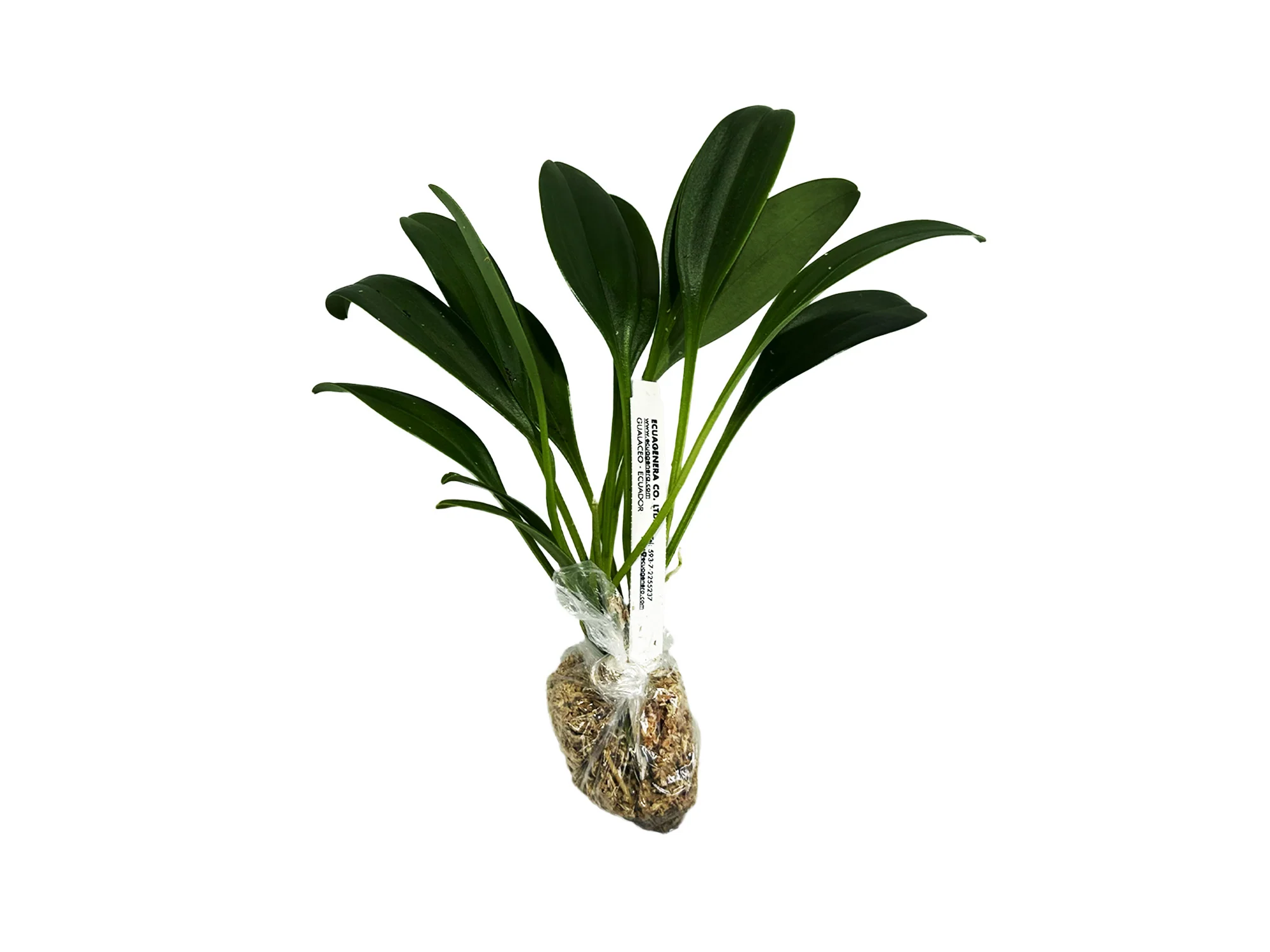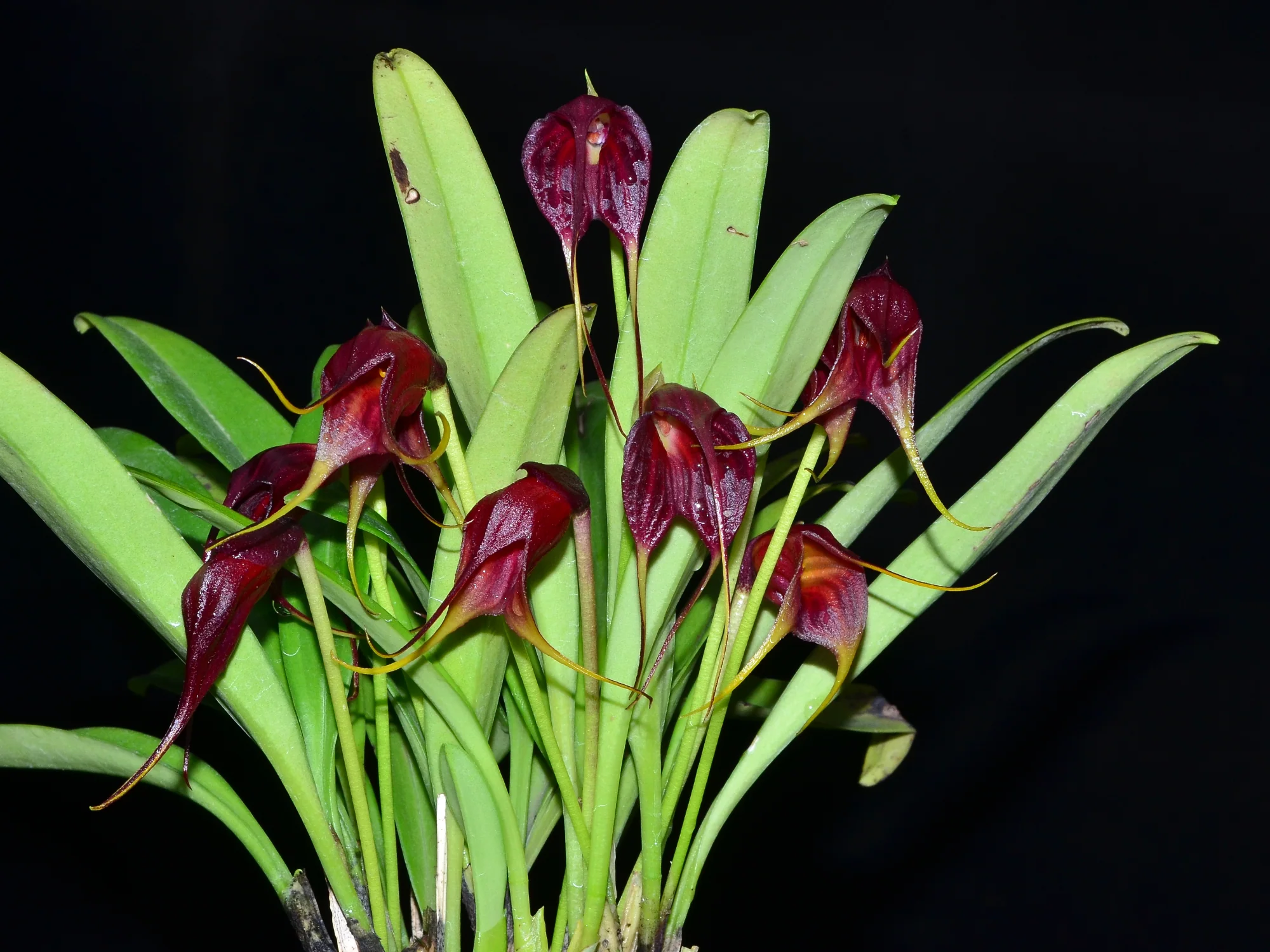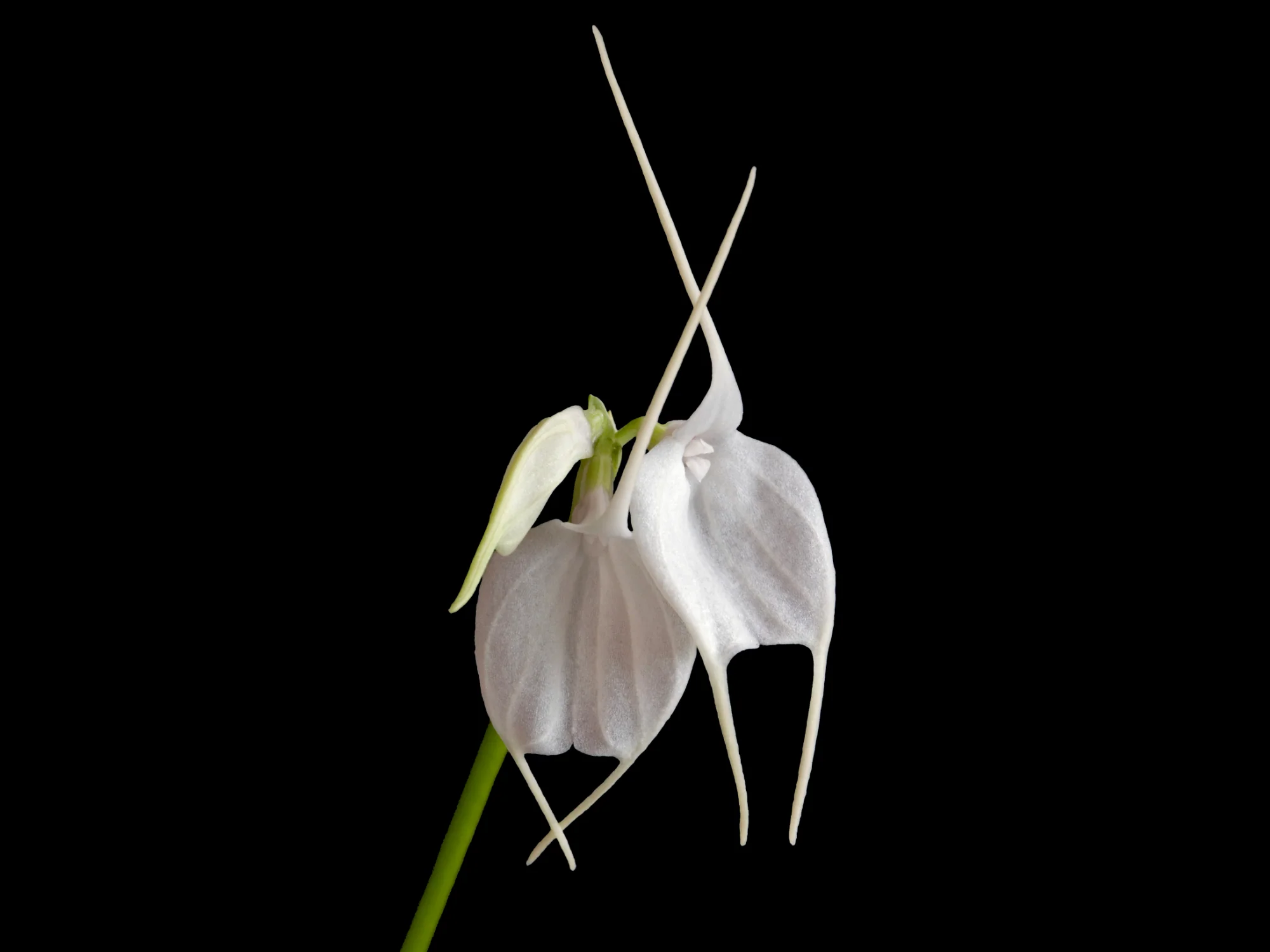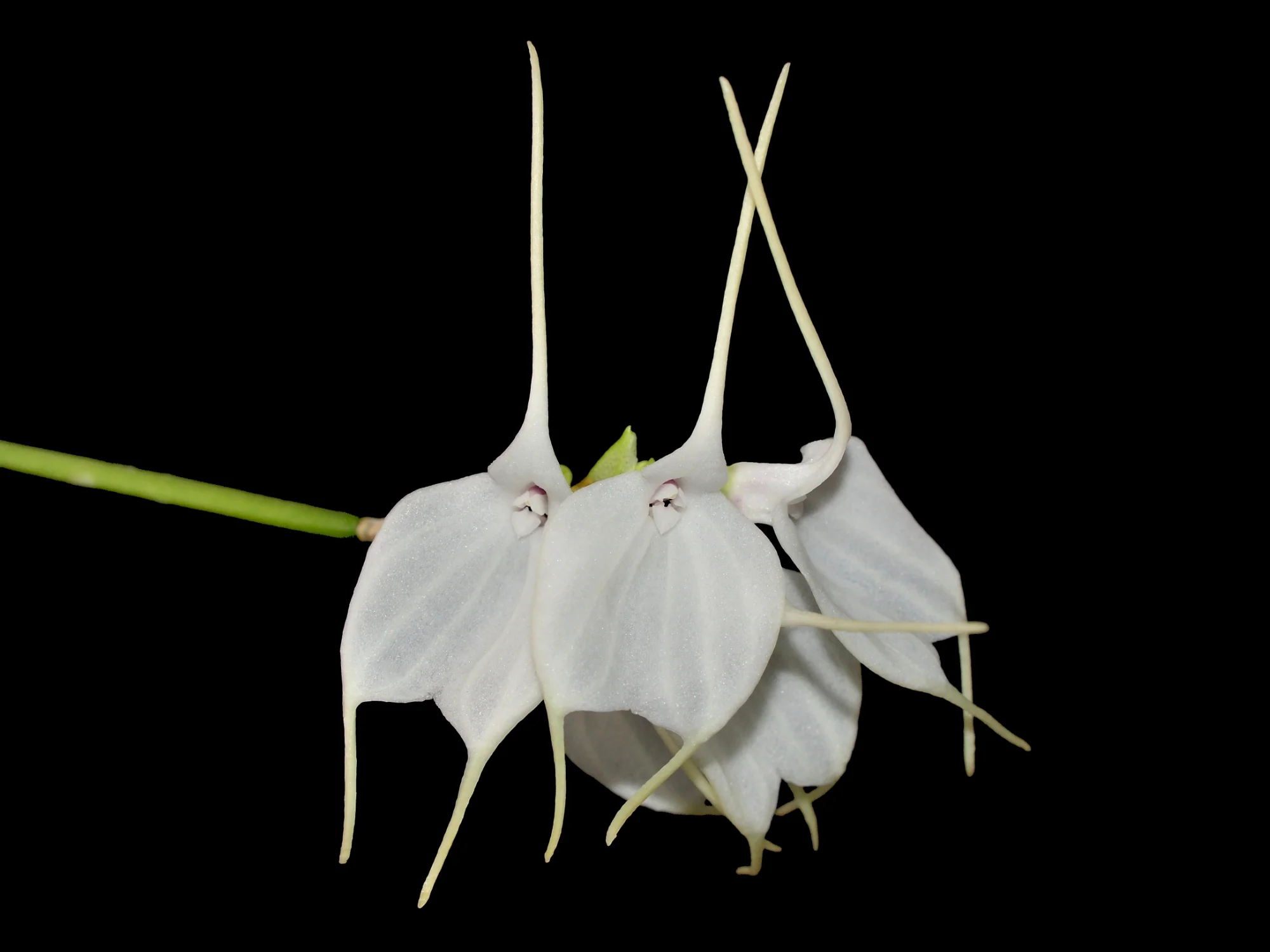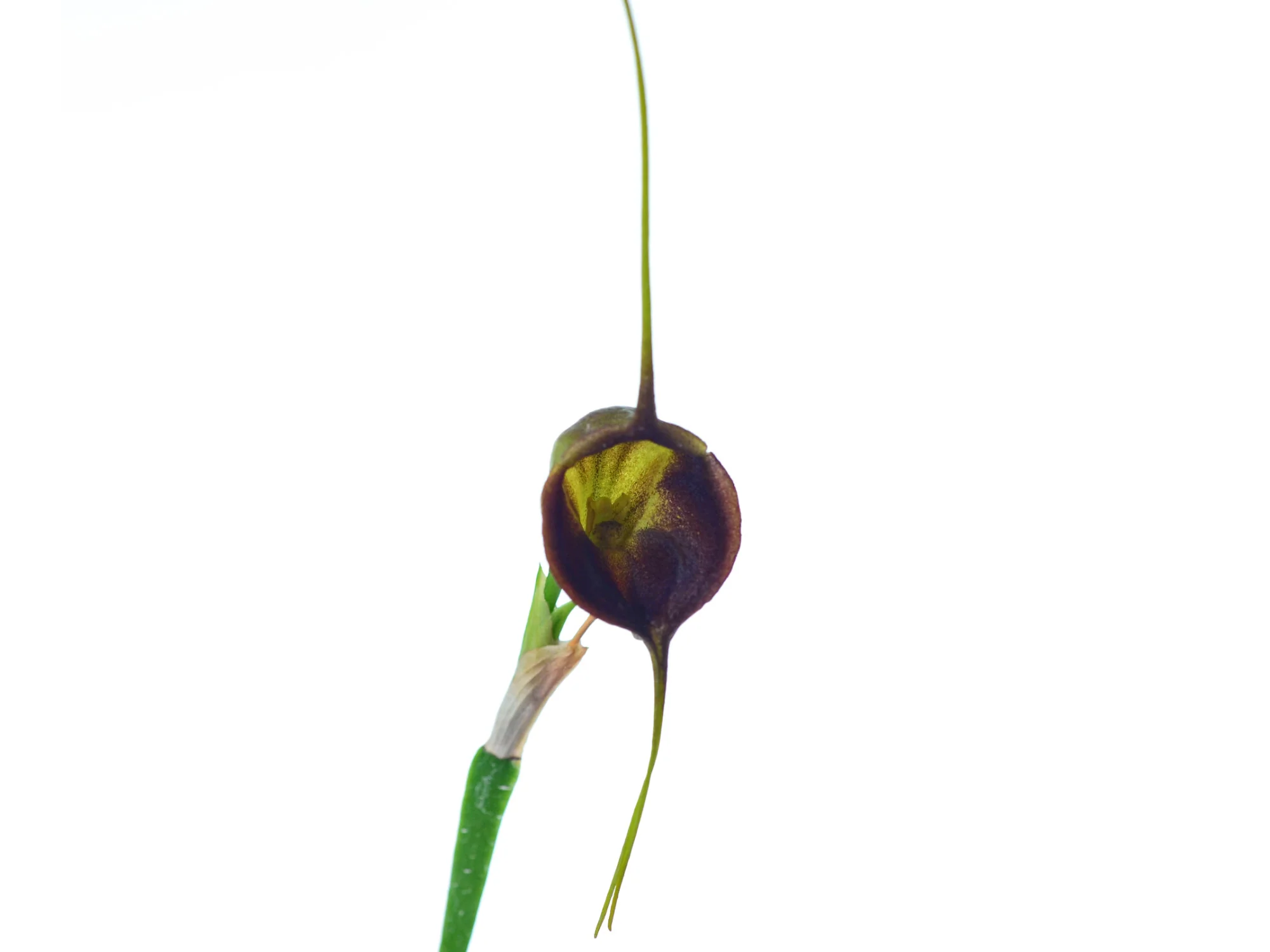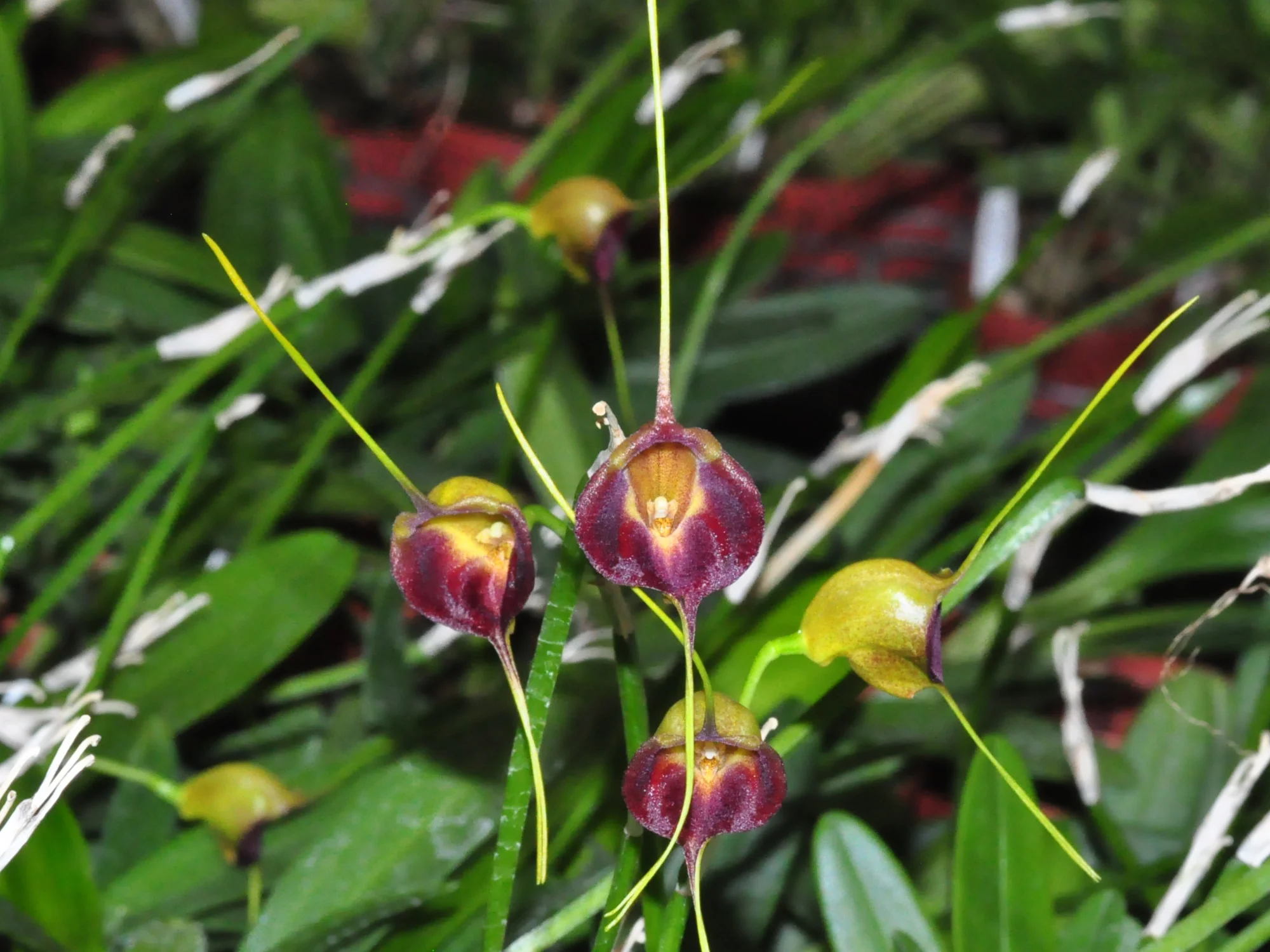
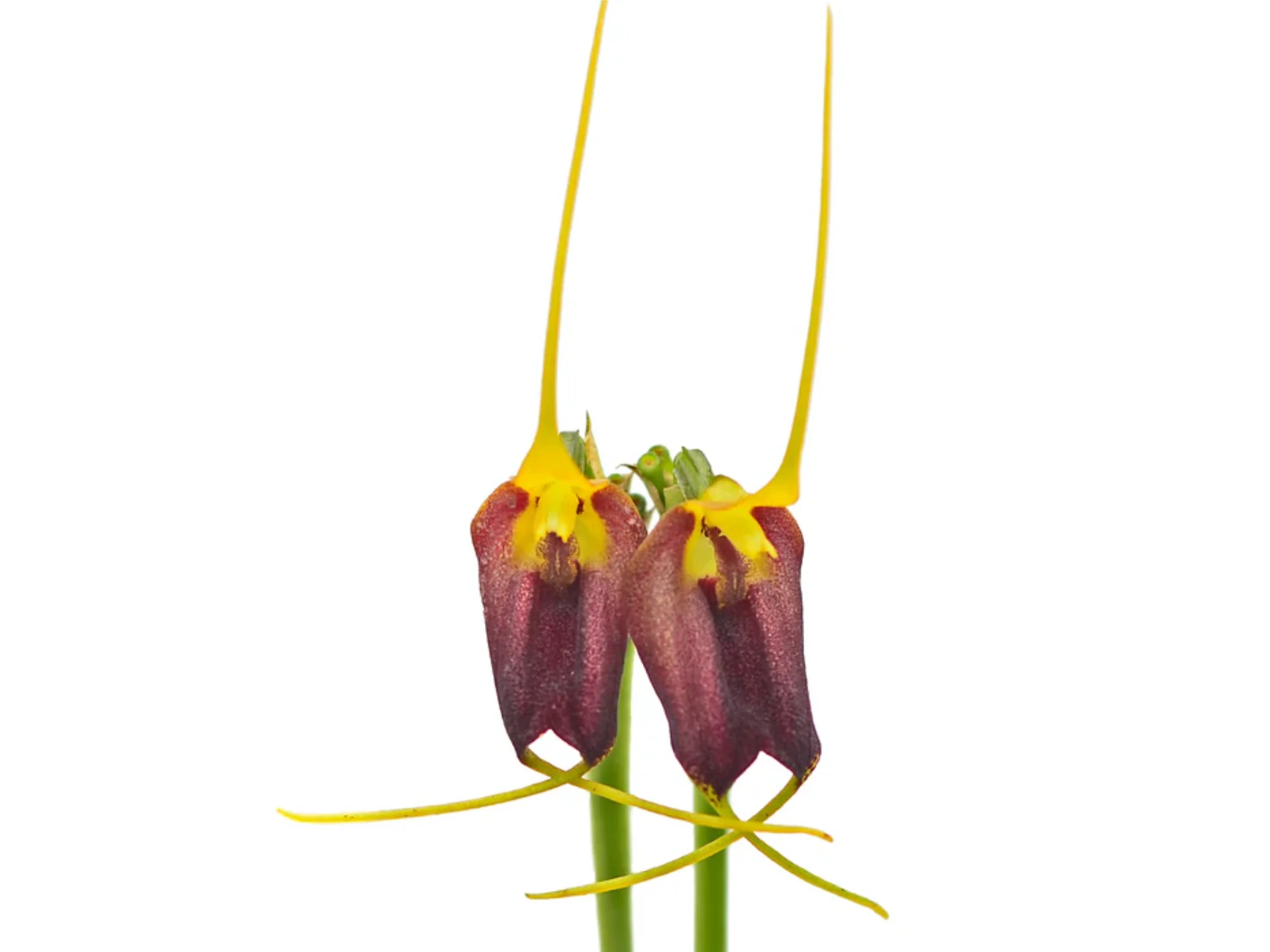
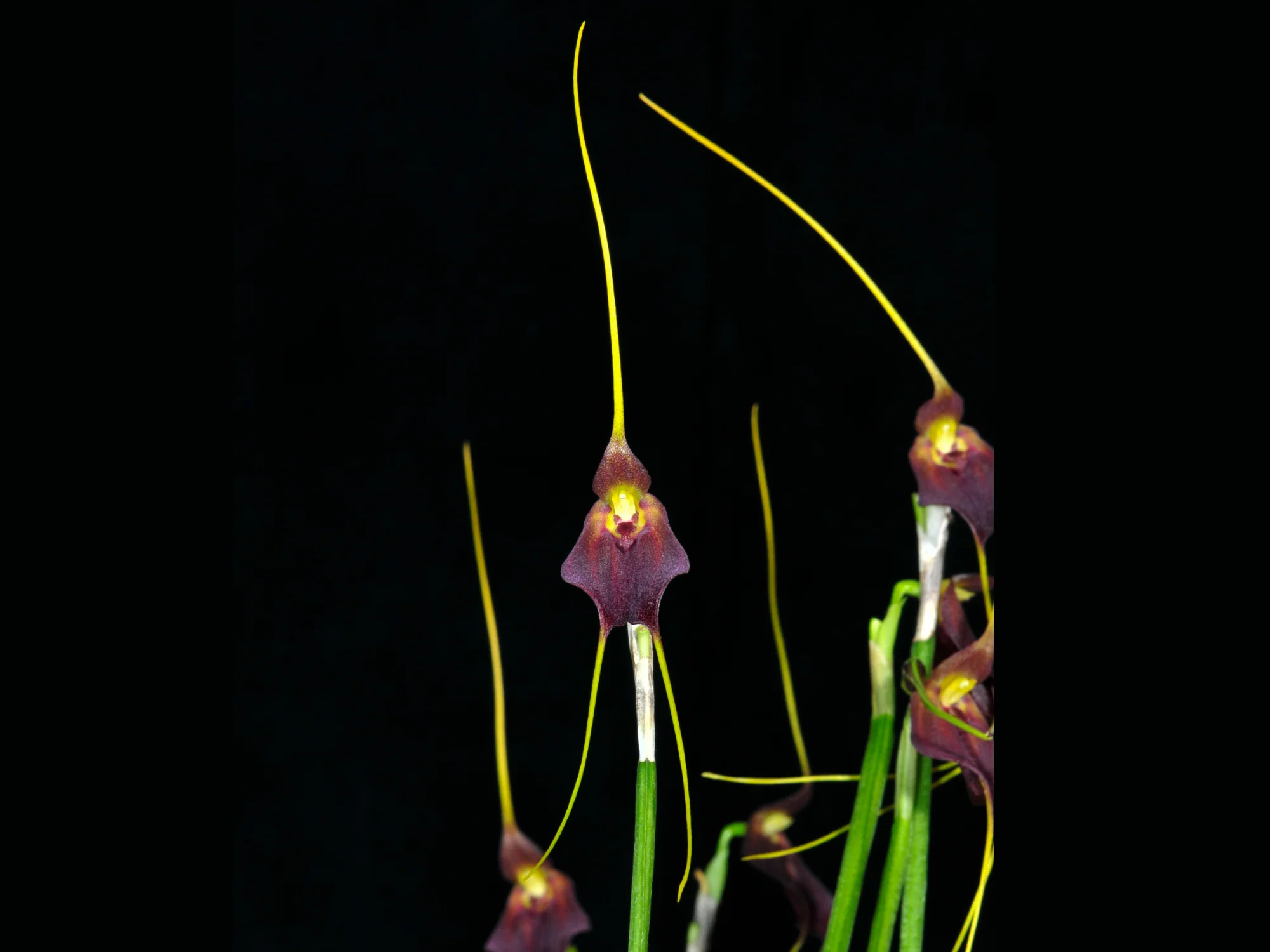
Masdevallia carruthersiana
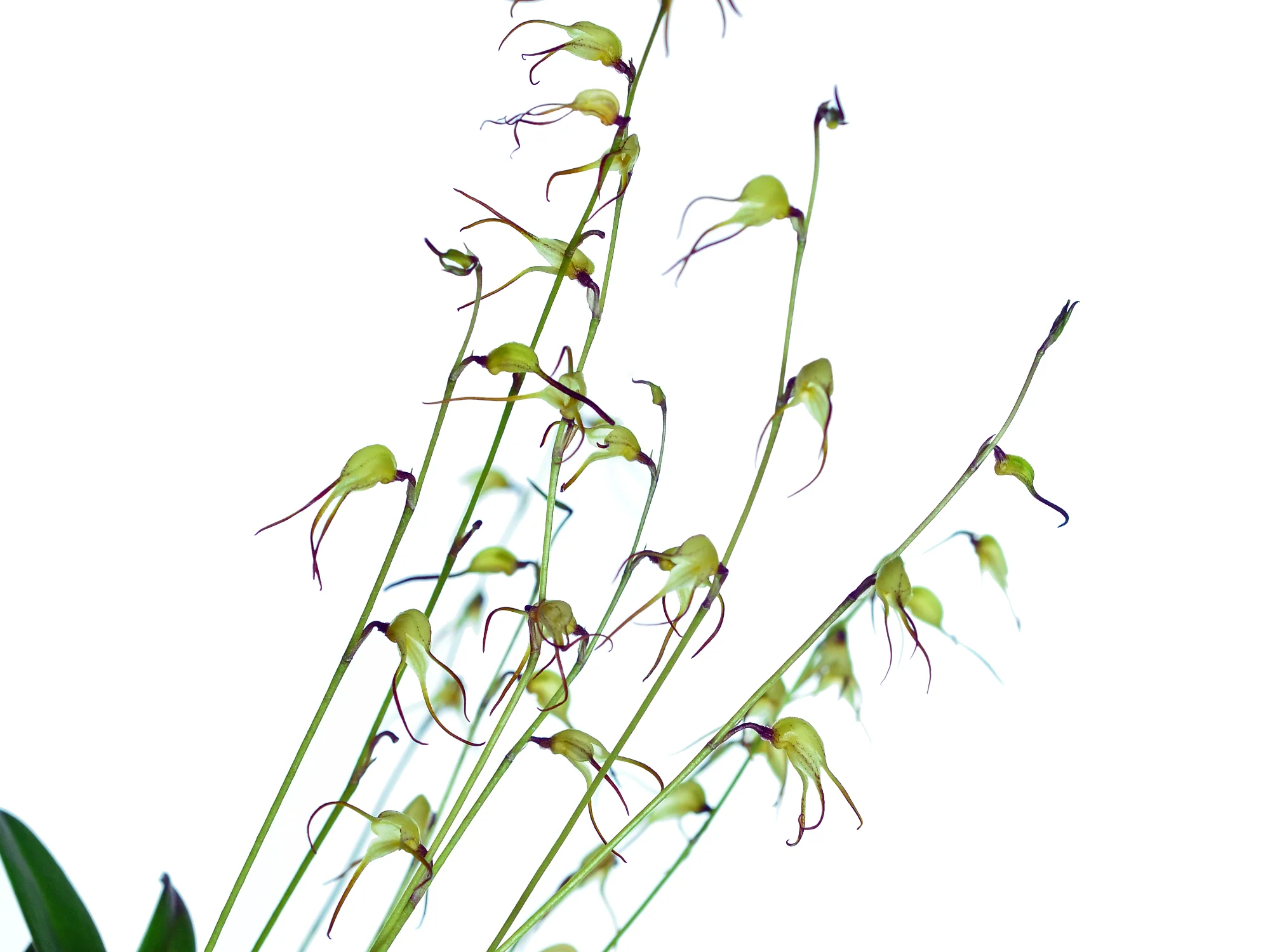
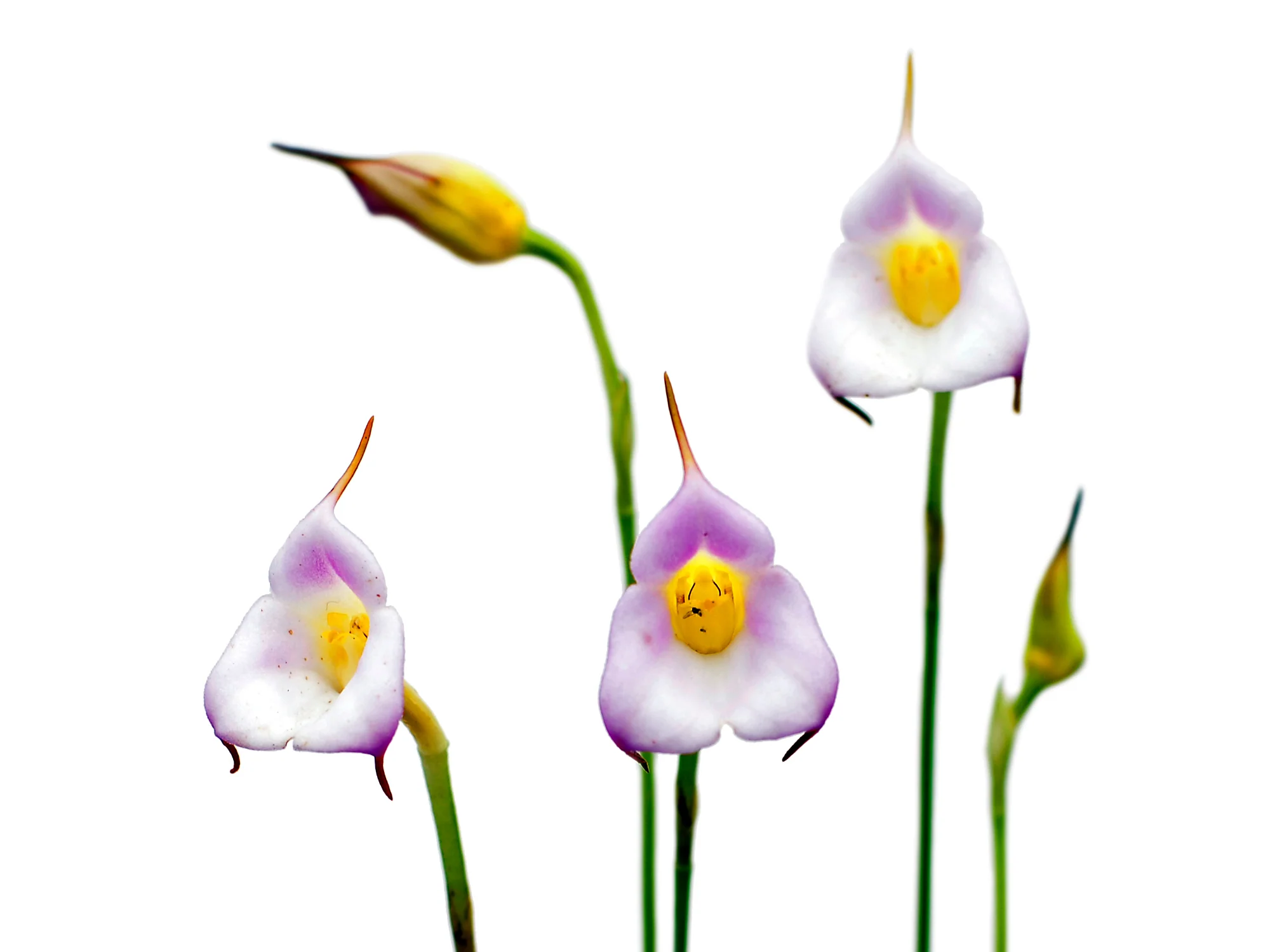
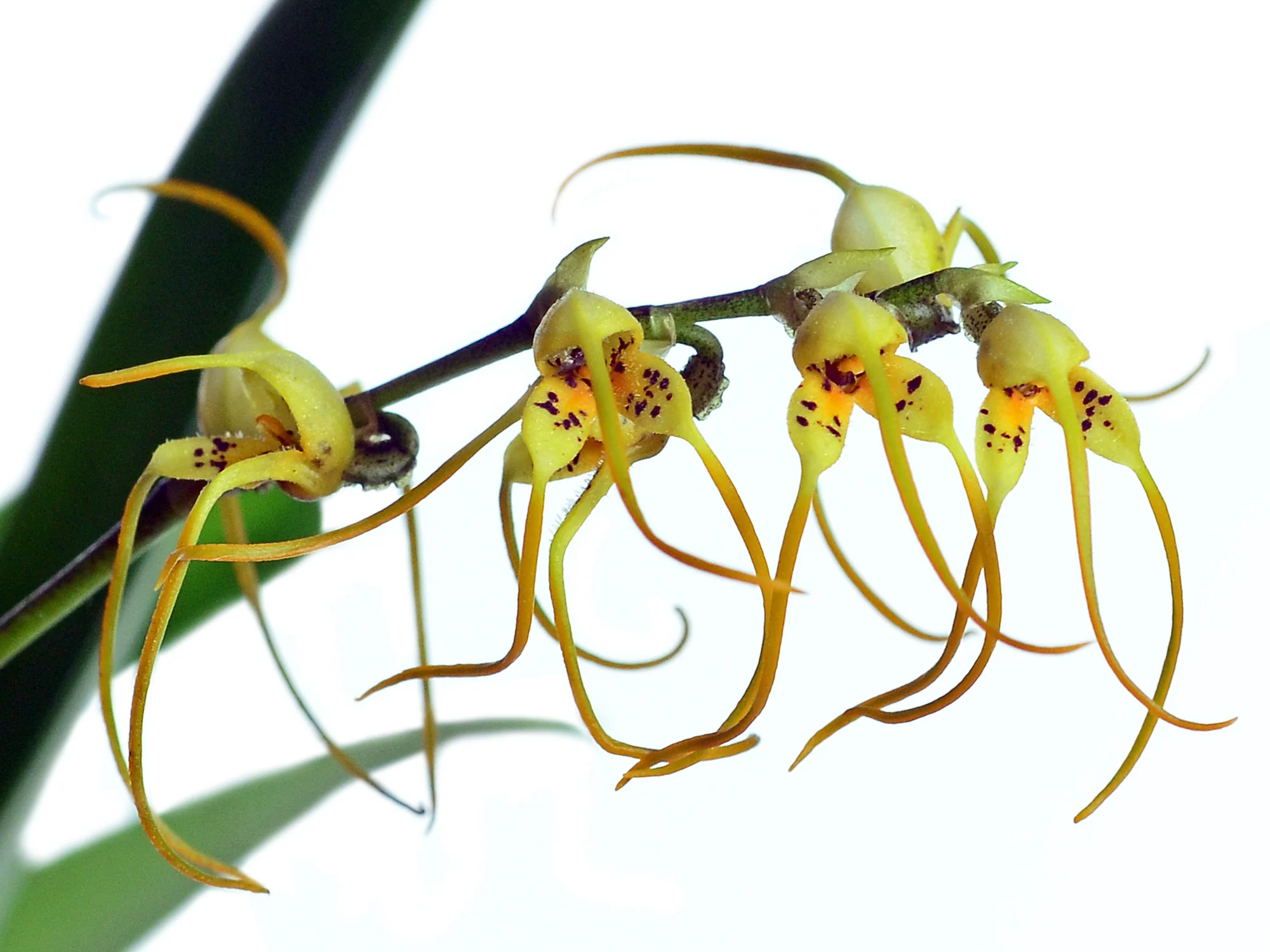
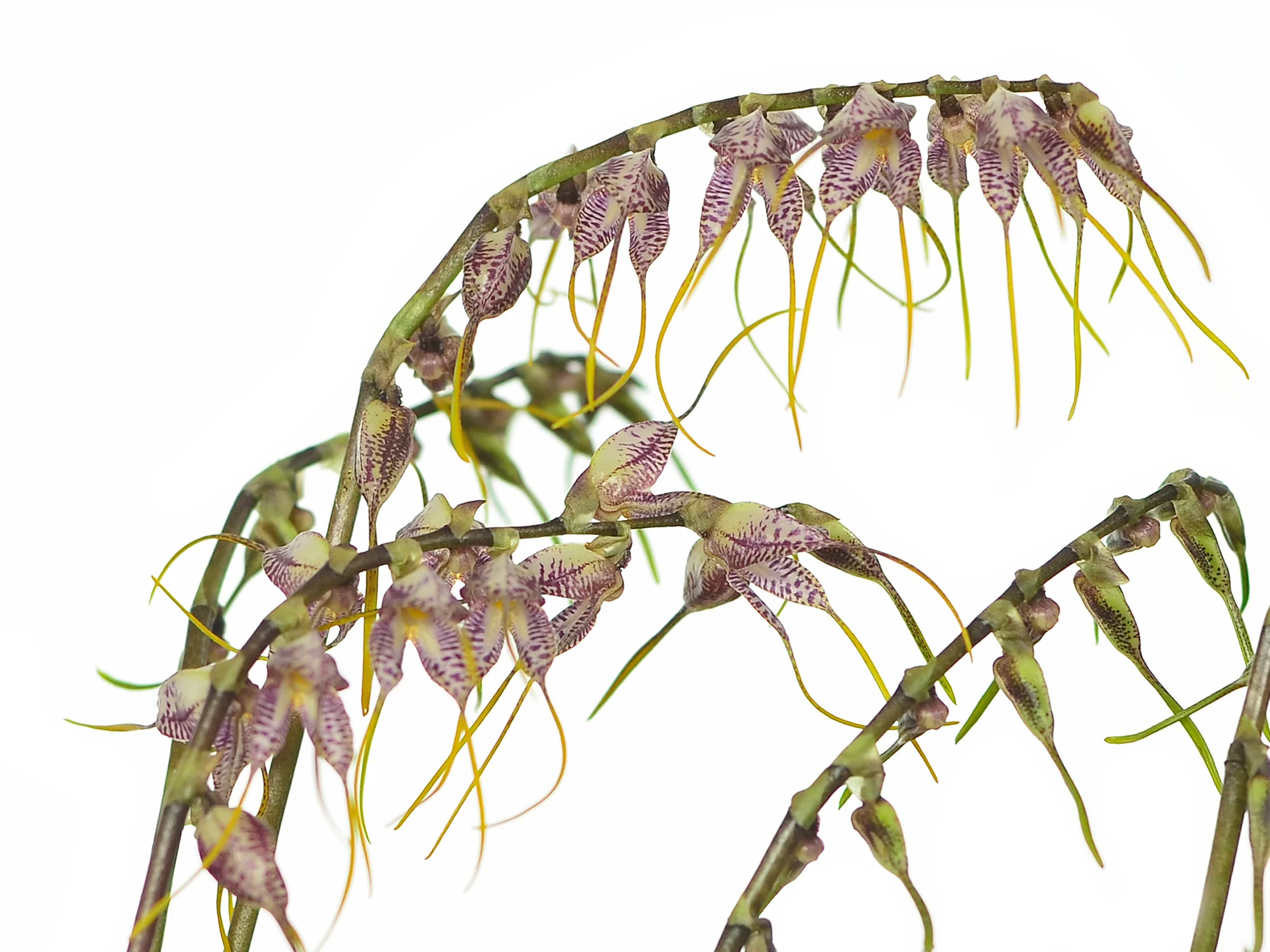
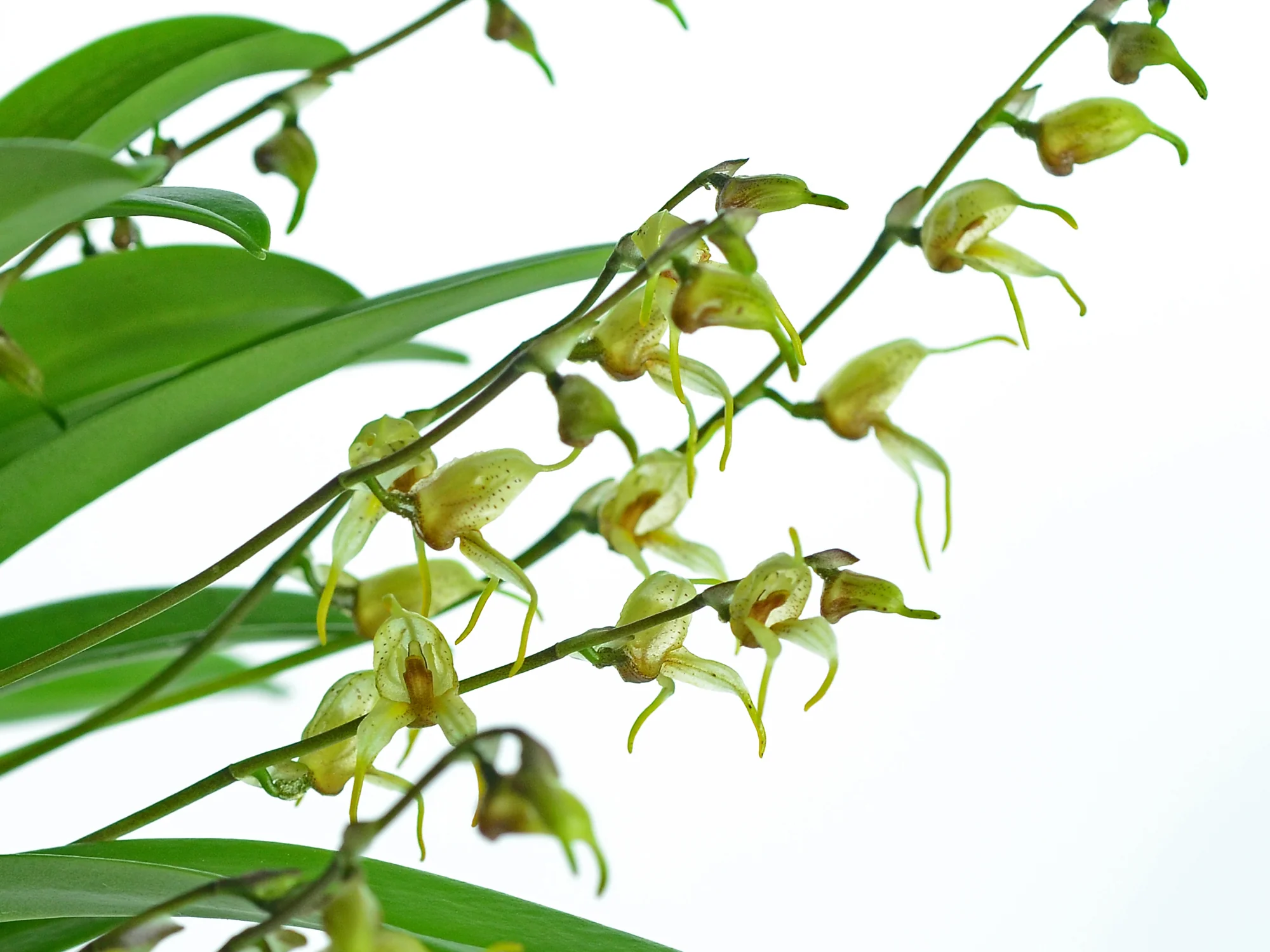
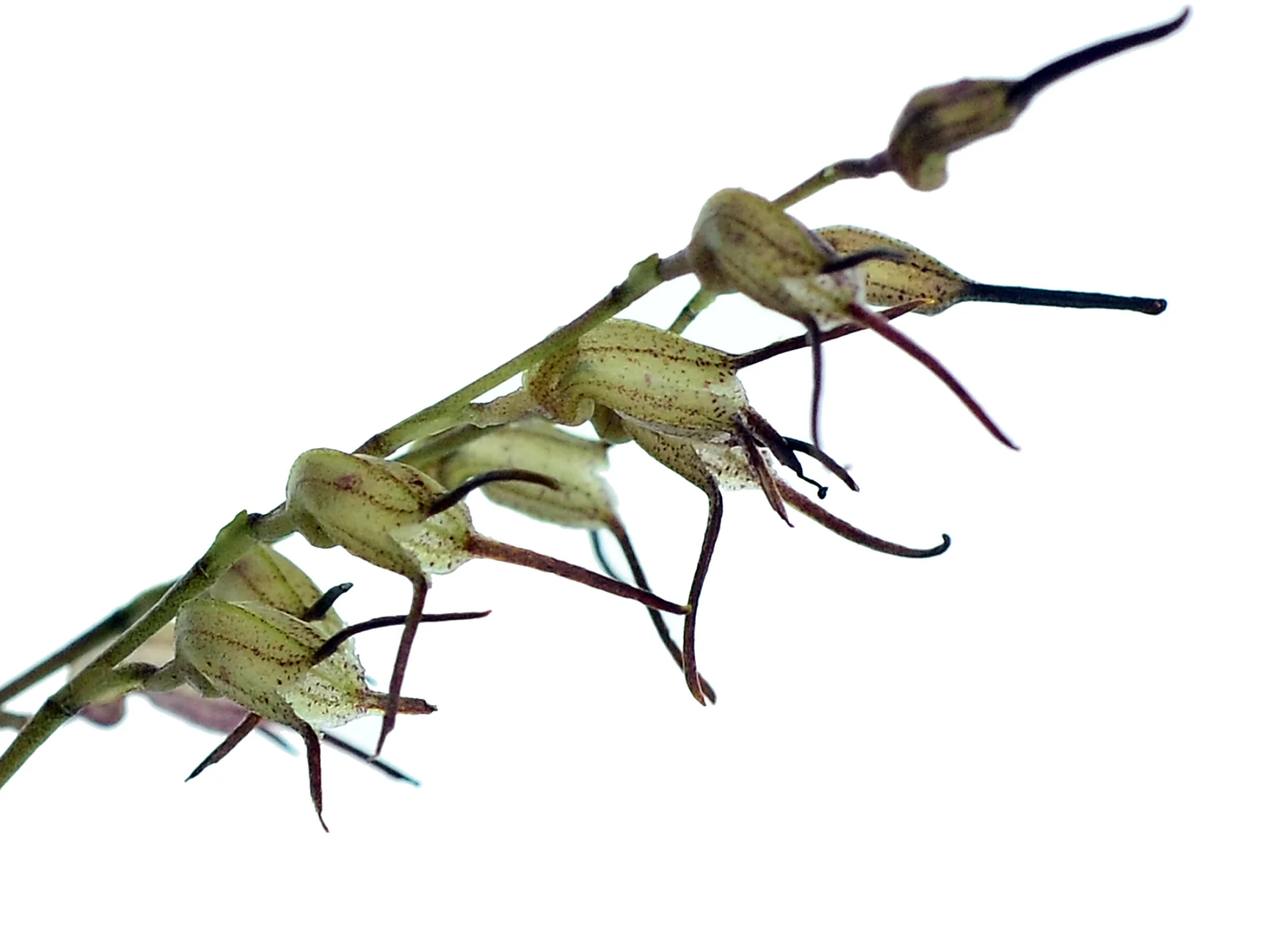
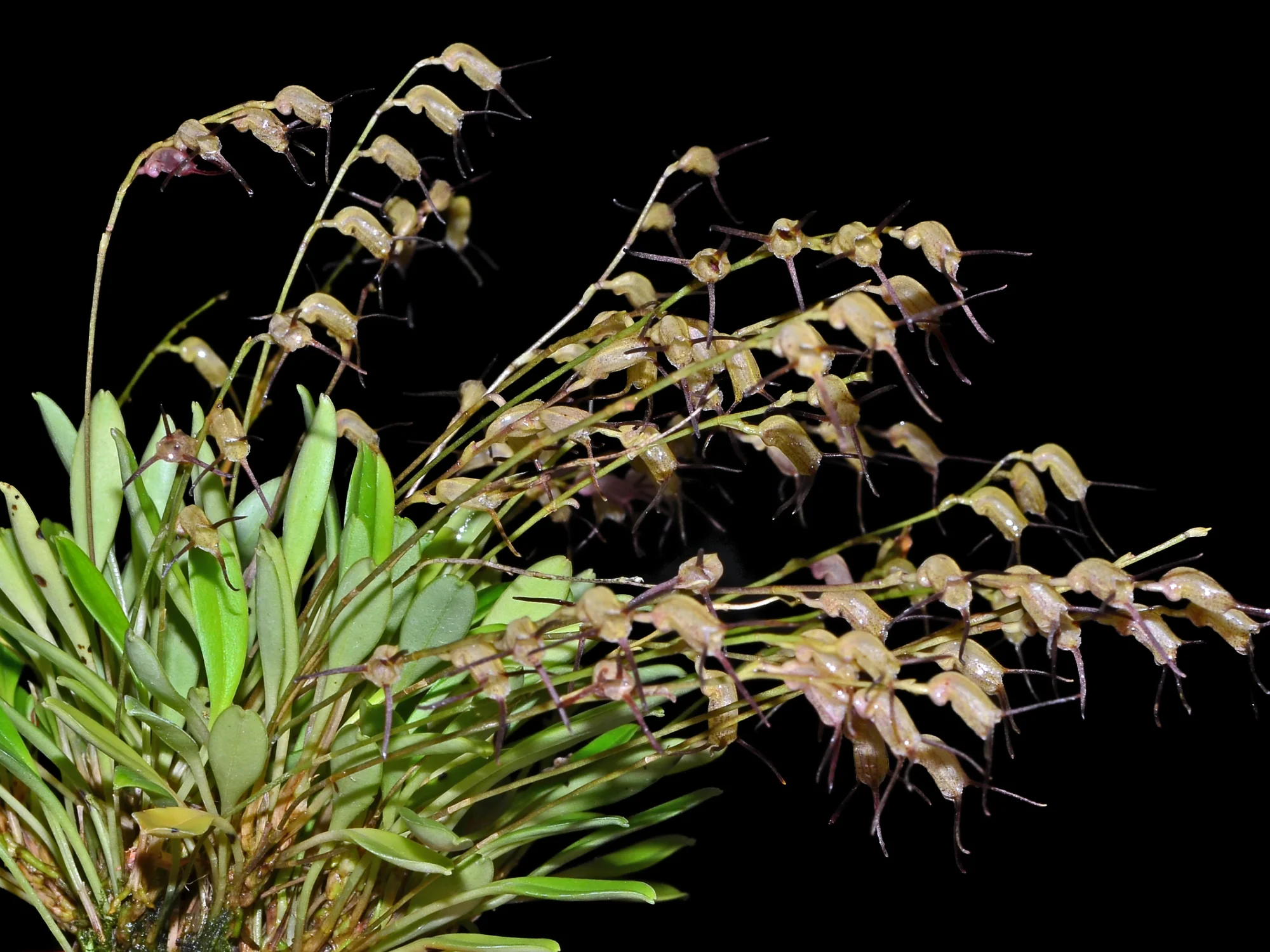
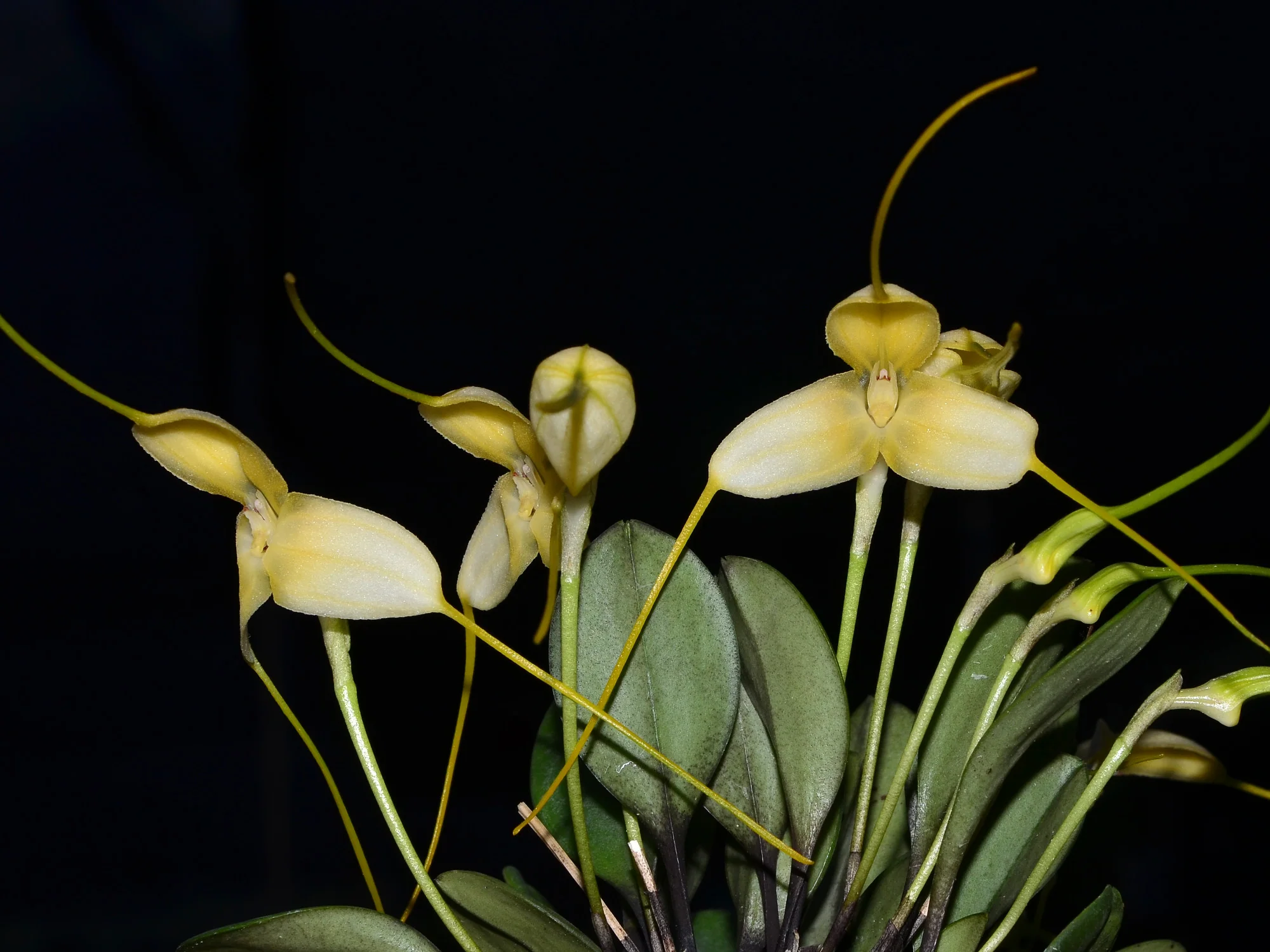
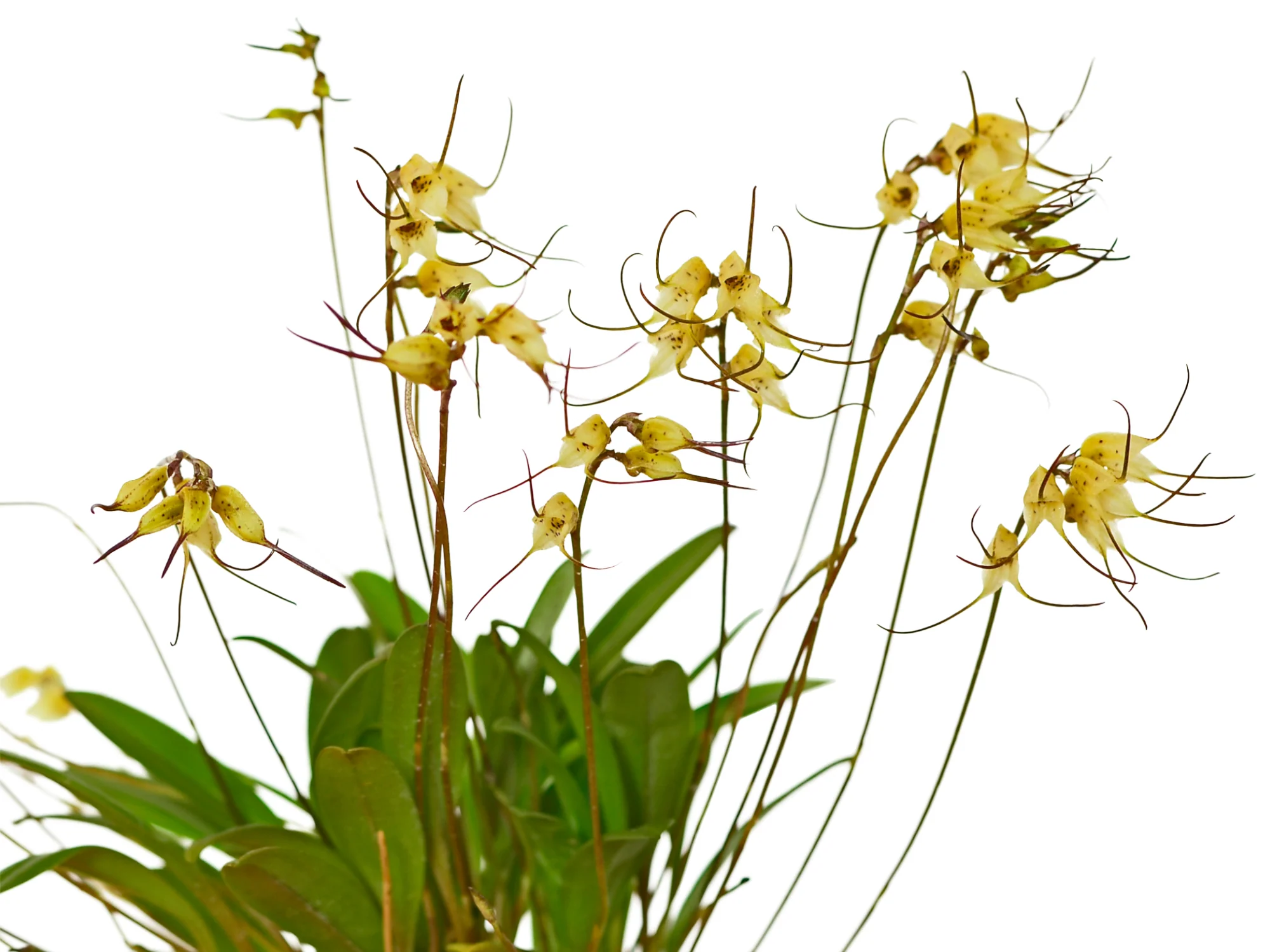
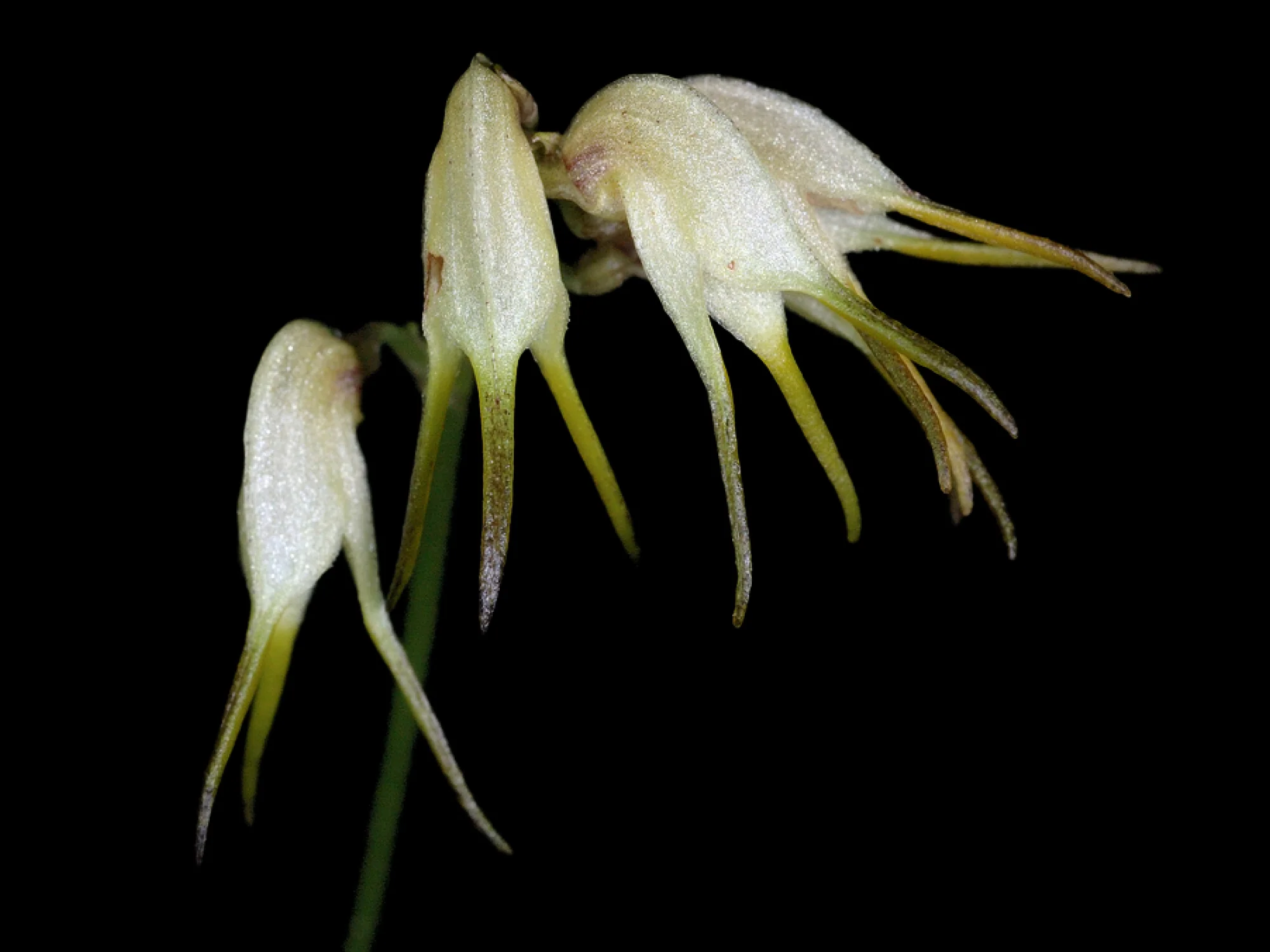
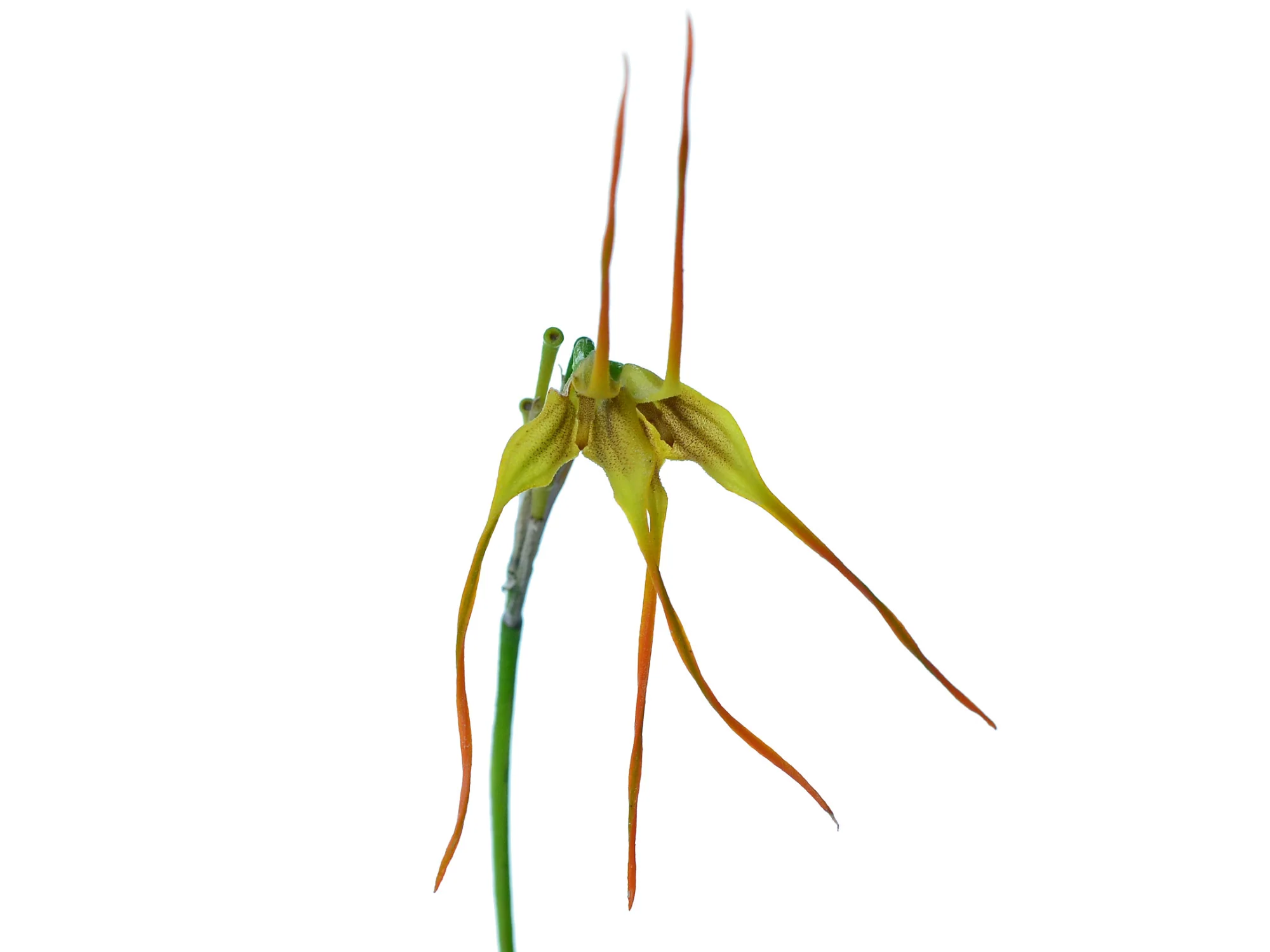
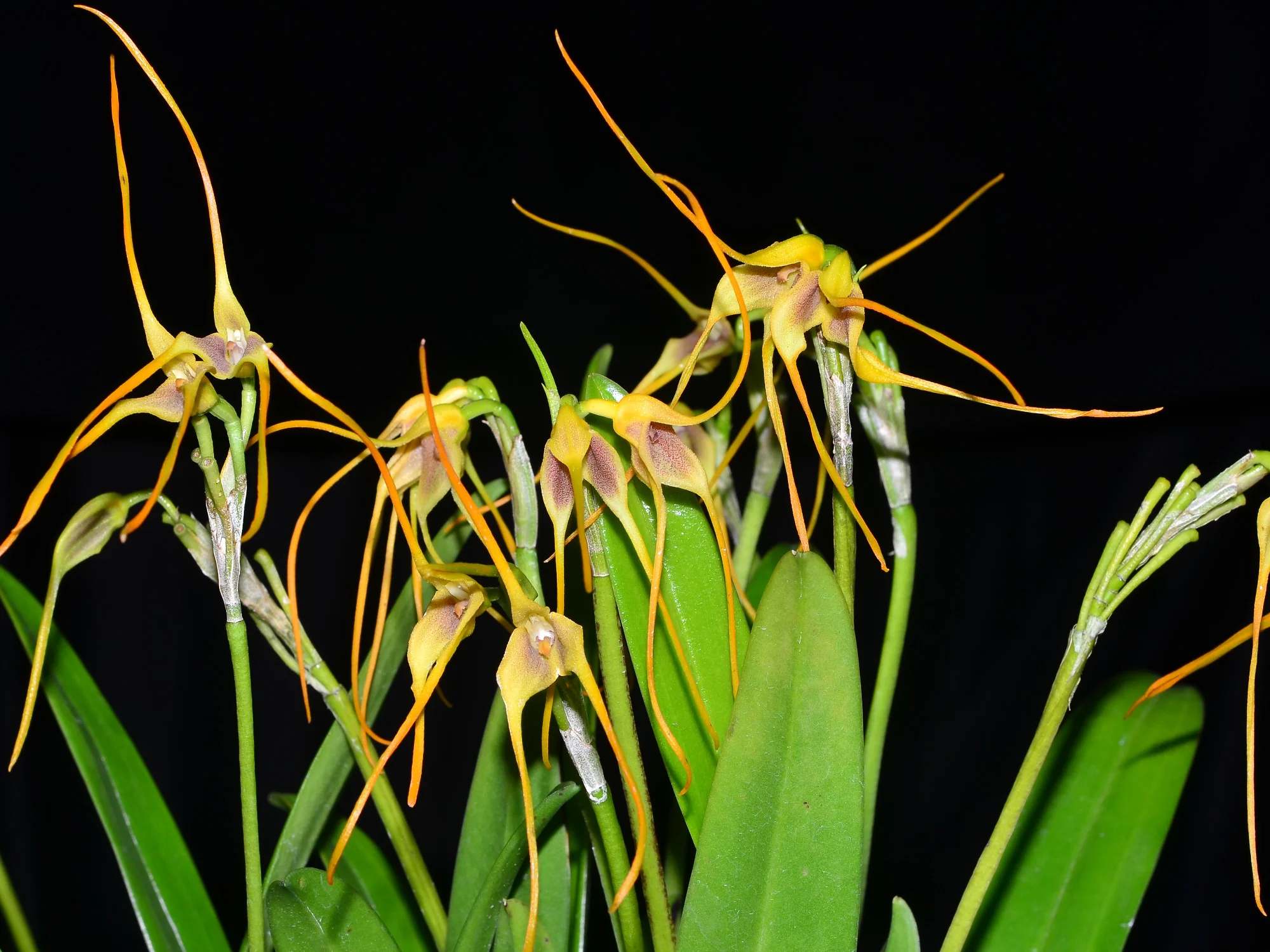
This striking species produces distinctive flowers with broad, fused sepals forming a cup-like structure and prominent sepaline tails that create an elegant silhouette. The compact growth habit and successive blooming make it a prized addition to any collection.
- Light: Bright shade to filtered light, avoiding direct sun which can burn the foliage; east-facing windows or 50-70% shade cloth recommended
- Temperature: Cool grower - 50-68°F (10-20°C) days, 45-55°F (7-13°C) nights; benefits from consistent cool conditions year-round with good day-night temperature differential
- Humidity: 70-85% with excellent air circulation to prevent fungal issues; use fans or natural airflow, mist in morning hours during dry periods
- Watering: Keep consistently moist year-round using pure water (rainwater or RO preferred), reduce frequency slightly in winter but never allow to dry completely; water in morning to allow foliage to dry before evening
Additional Notes
Native to the cloud forests of elevations of 2,400-3,200 meters, this species is named after botanist William Carruthers. Best grown mounted on tree fern or cork bark, or in small pots with fine-grade bark mix or sphagnum moss.
Original: $16.00
-70%$16.00
$4.80Product Information
Product Information
Shipping & Returns
Shipping & Returns
Description
This striking species produces distinctive flowers with broad, fused sepals forming a cup-like structure and prominent sepaline tails that create an elegant silhouette. The compact growth habit and successive blooming make it a prized addition to any collection.
- Light: Bright shade to filtered light, avoiding direct sun which can burn the foliage; east-facing windows or 50-70% shade cloth recommended
- Temperature: Cool grower - 50-68°F (10-20°C) days, 45-55°F (7-13°C) nights; benefits from consistent cool conditions year-round with good day-night temperature differential
- Humidity: 70-85% with excellent air circulation to prevent fungal issues; use fans or natural airflow, mist in morning hours during dry periods
- Watering: Keep consistently moist year-round using pure water (rainwater or RO preferred), reduce frequency slightly in winter but never allow to dry completely; water in morning to allow foliage to dry before evening
Additional Notes
Native to the cloud forests of elevations of 2,400-3,200 meters, this species is named after botanist William Carruthers. Best grown mounted on tree fern or cork bark, or in small pots with fine-grade bark mix or sphagnum moss.