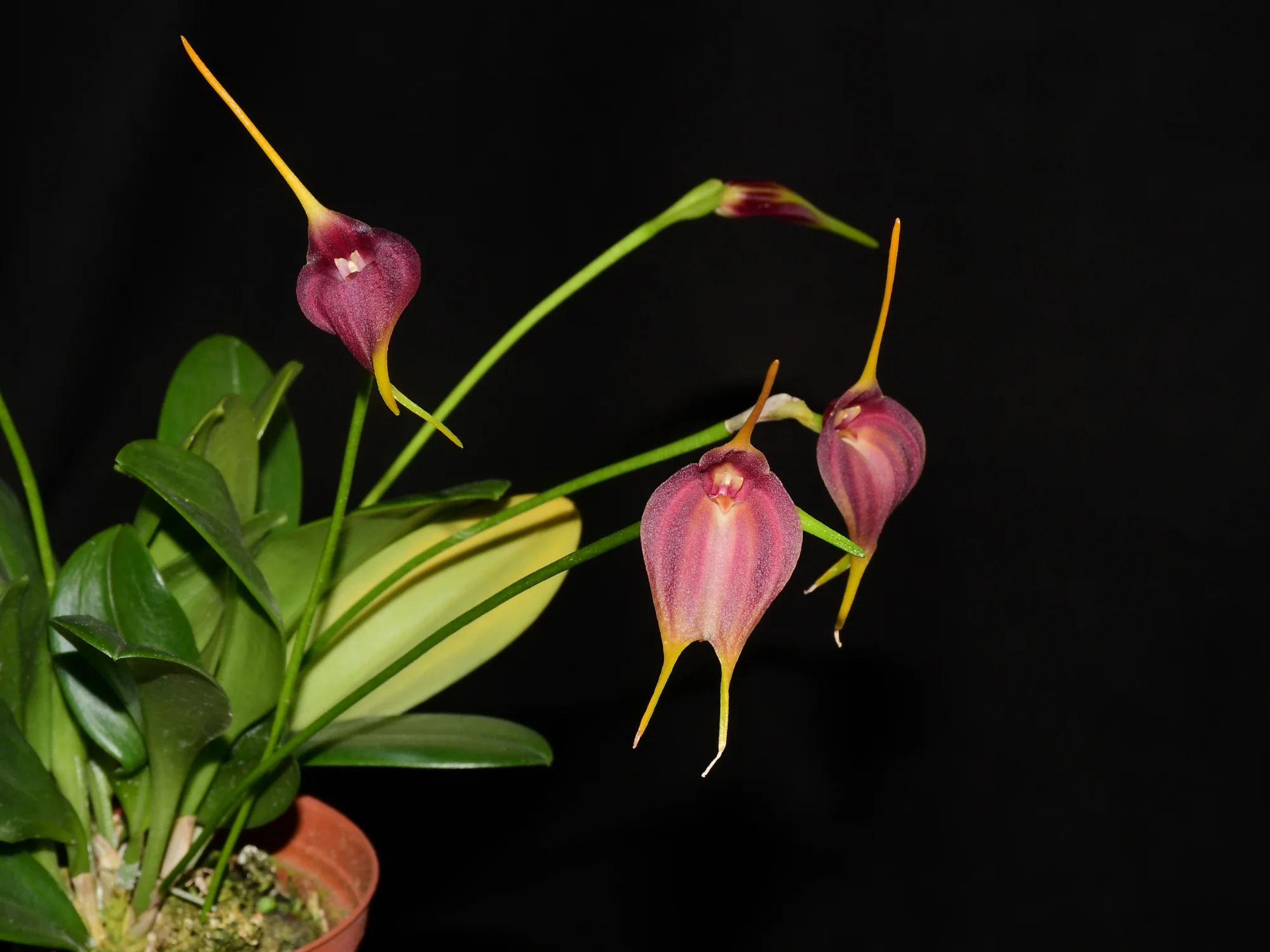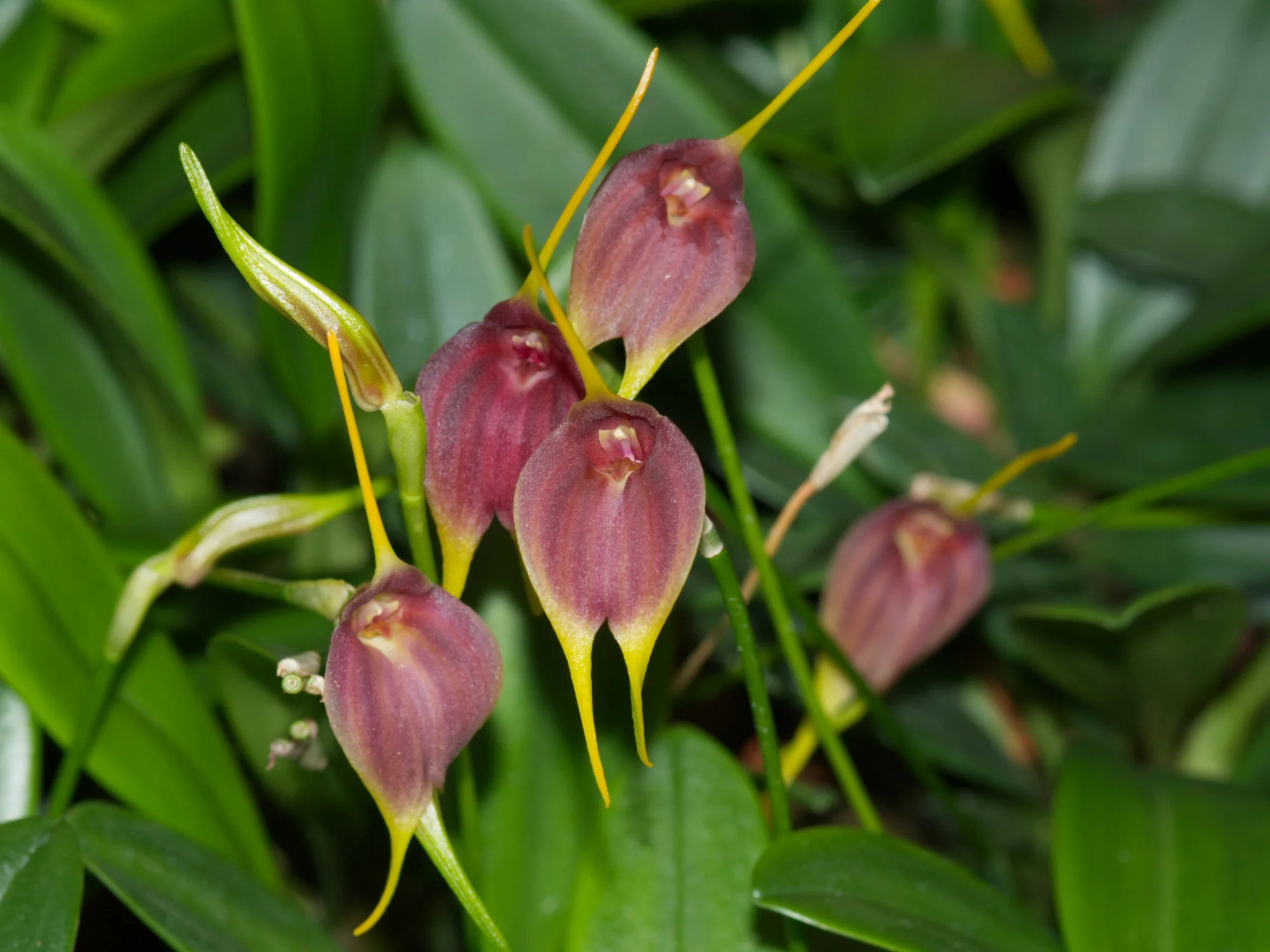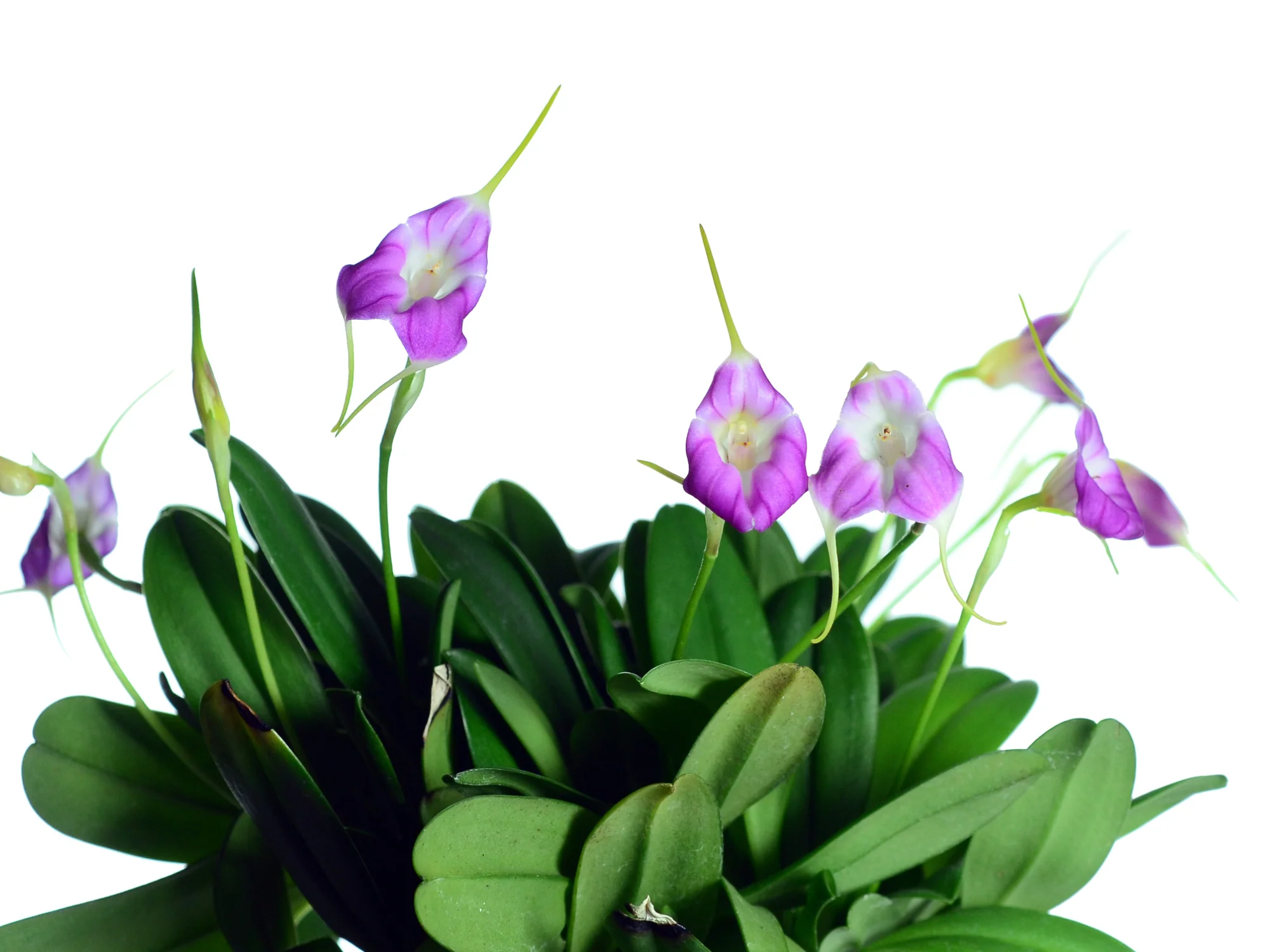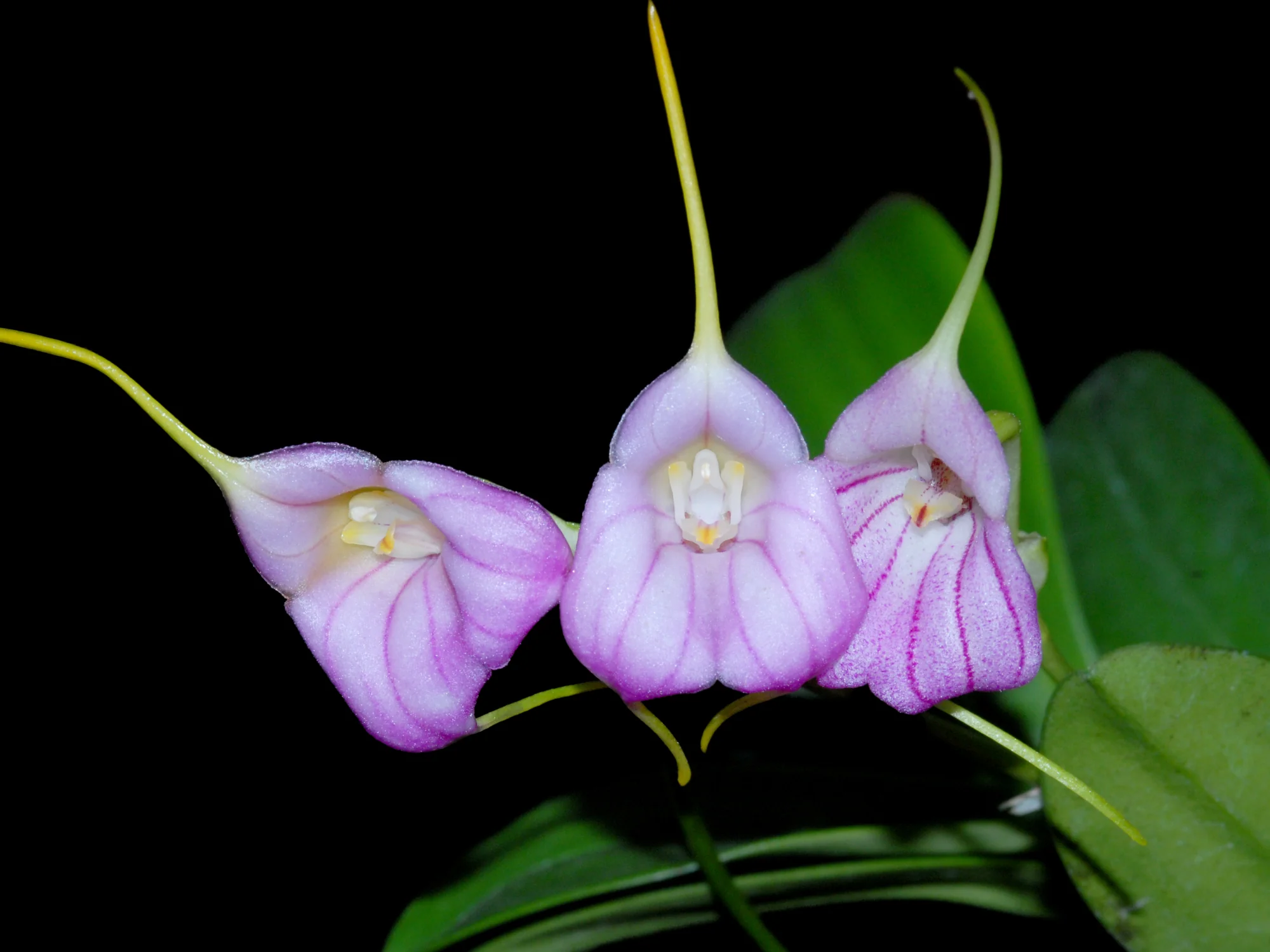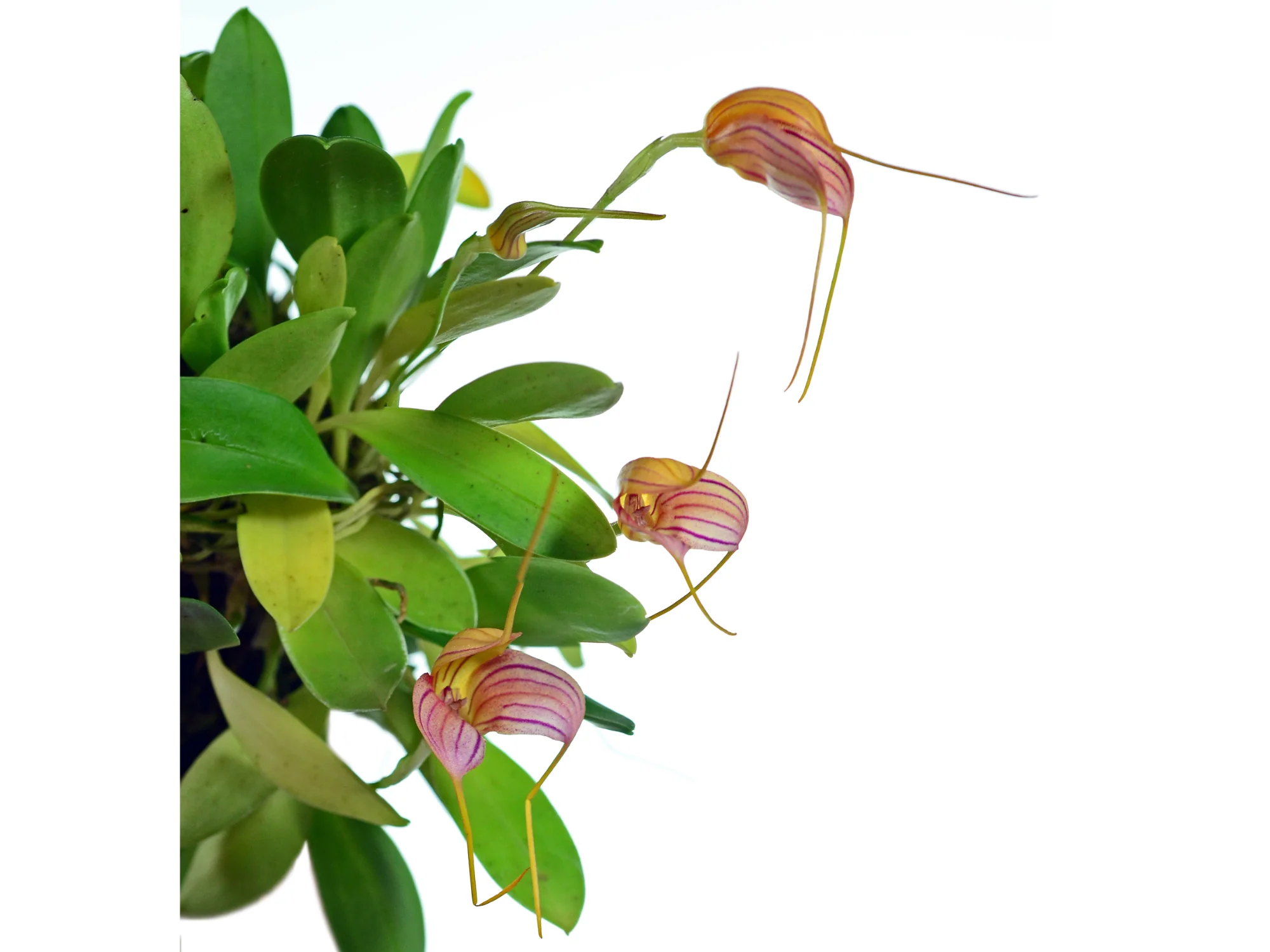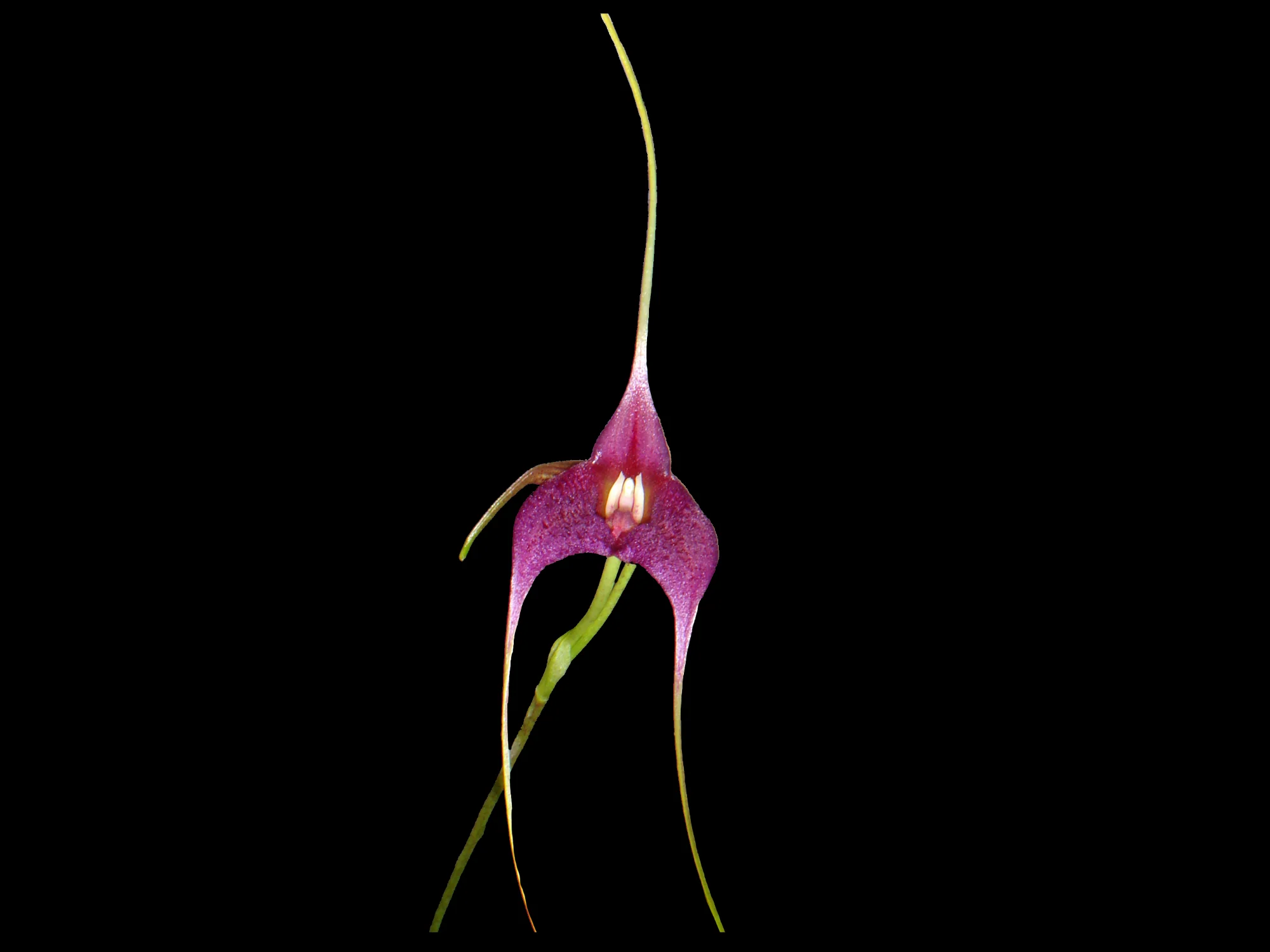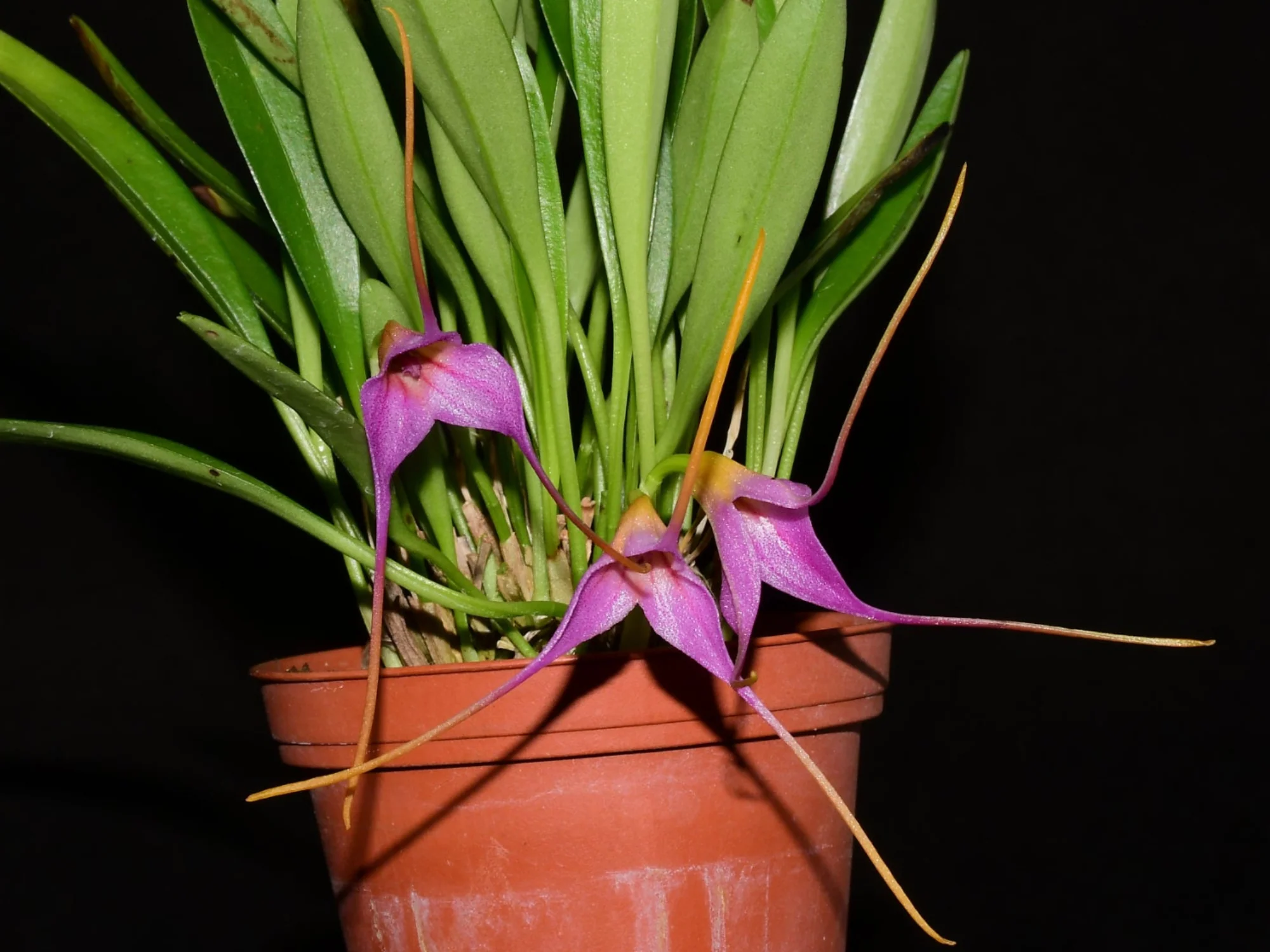
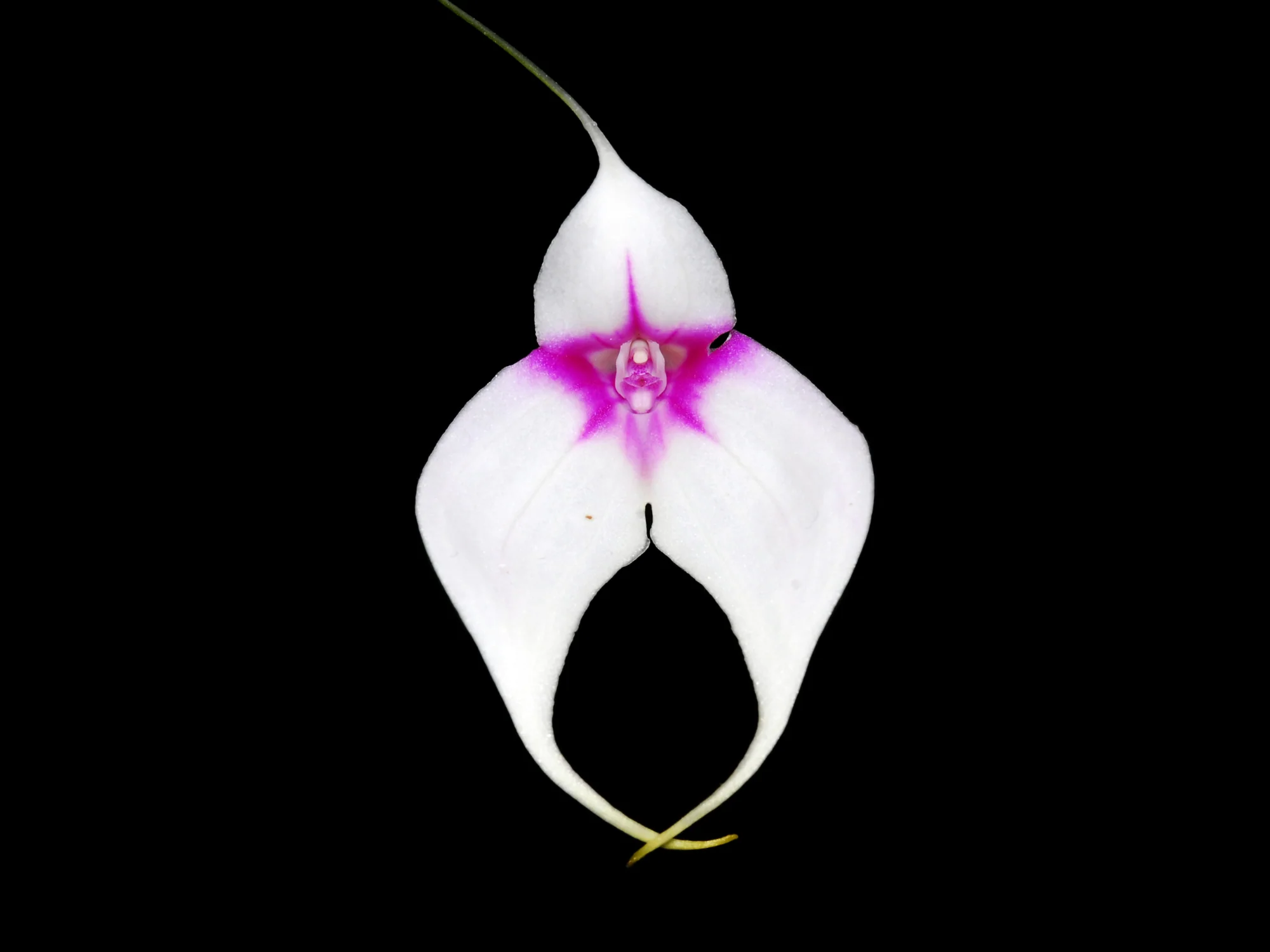
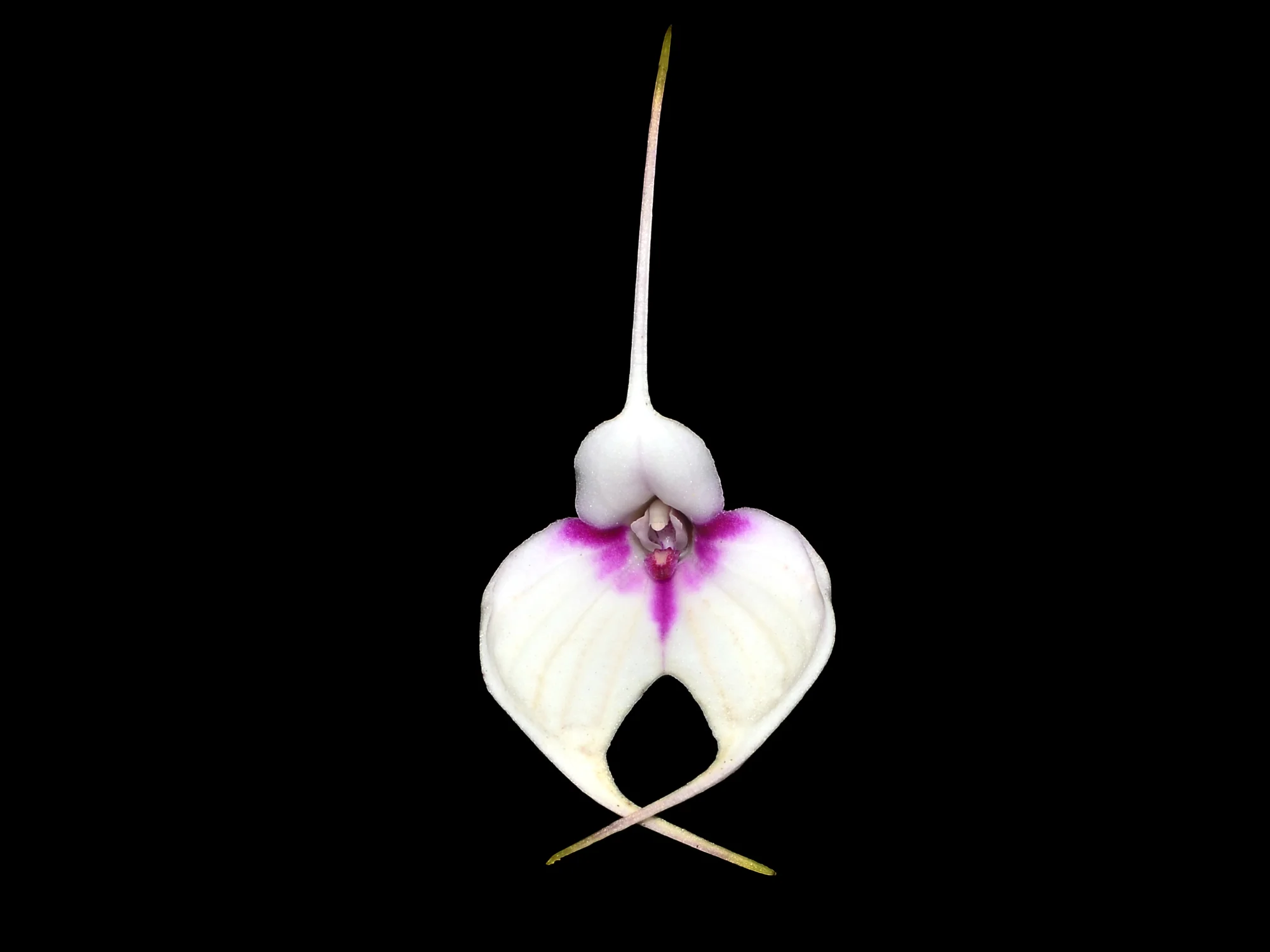
Masdevallia Crystal Follansbee
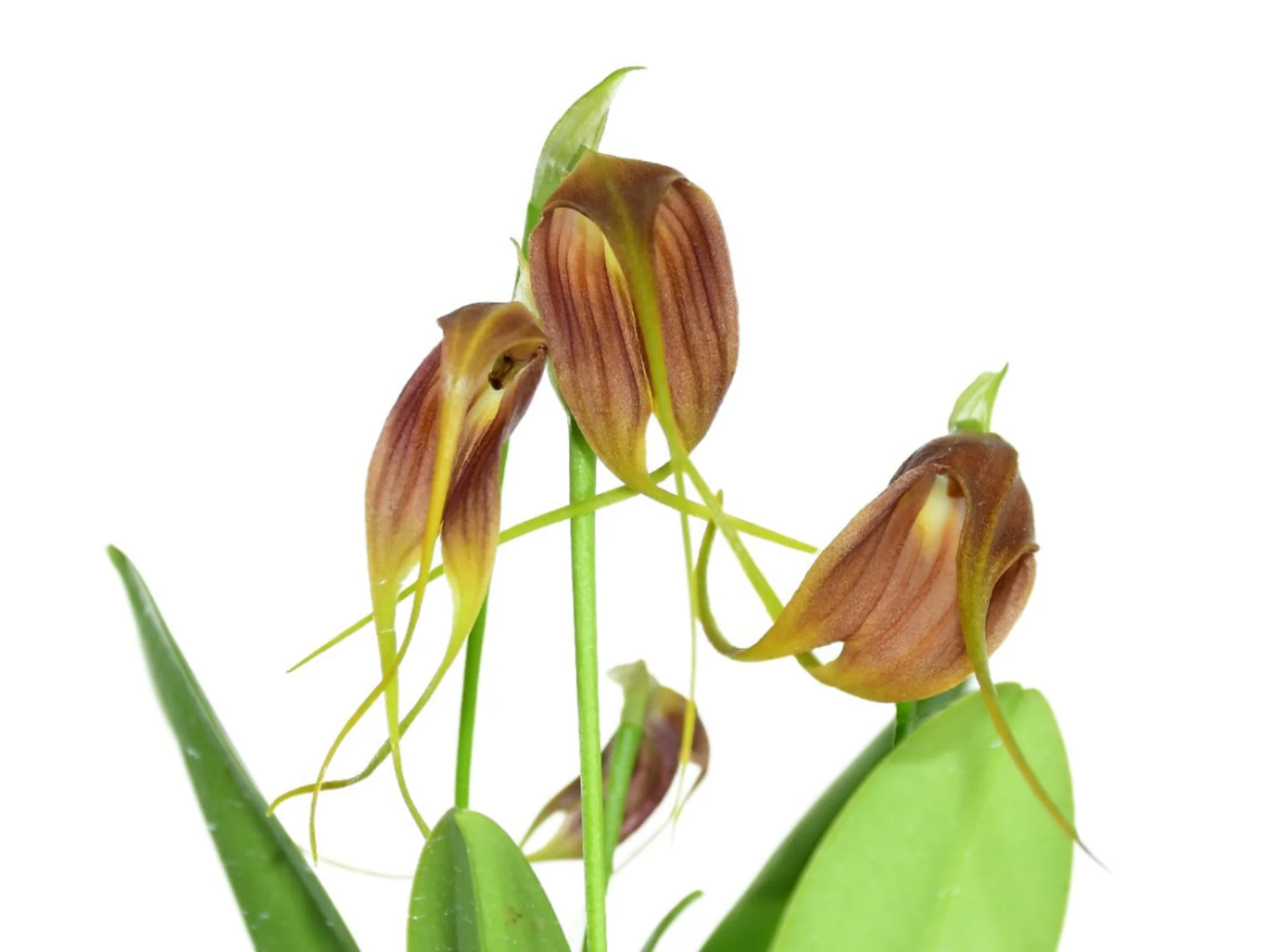
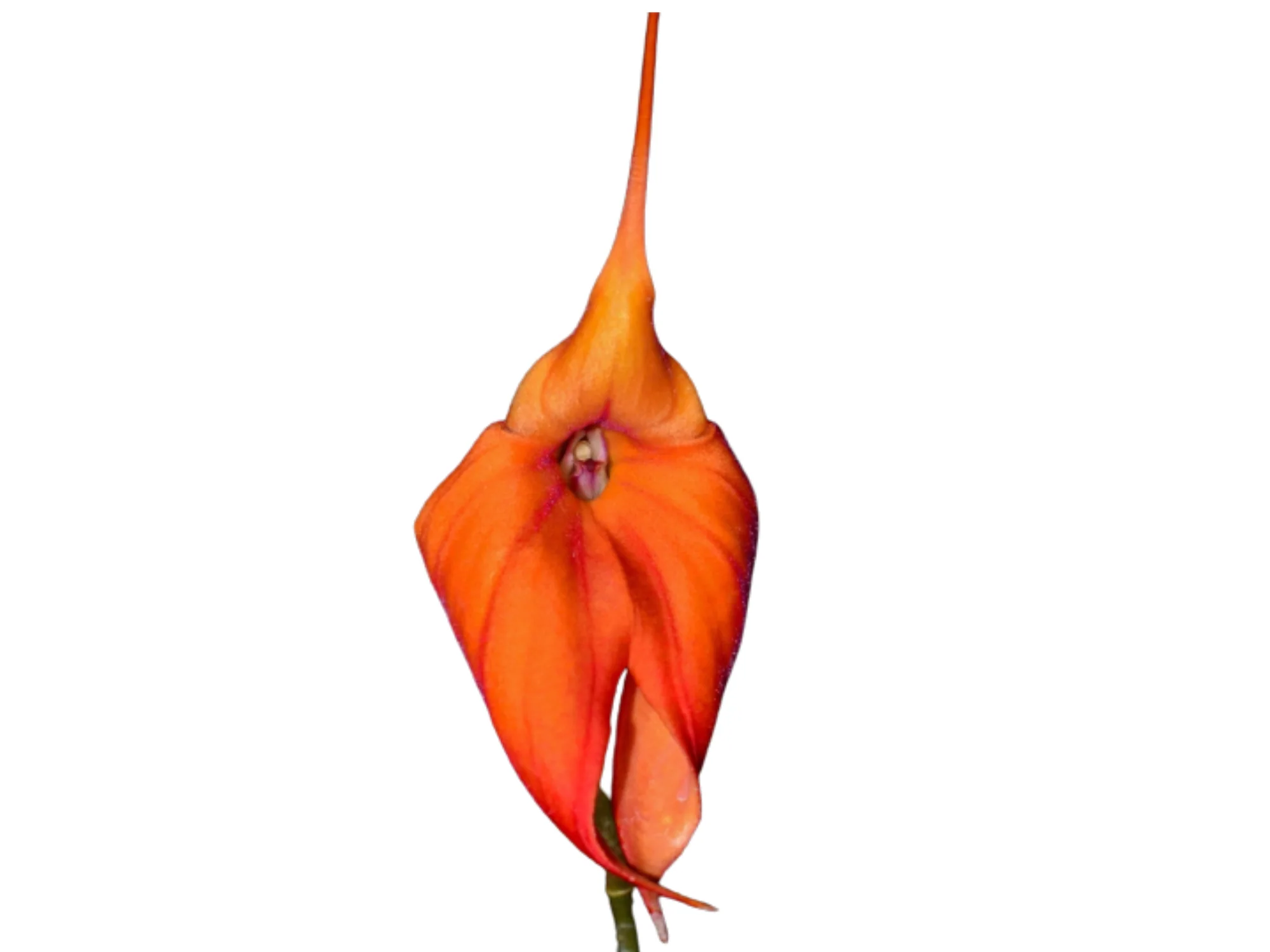
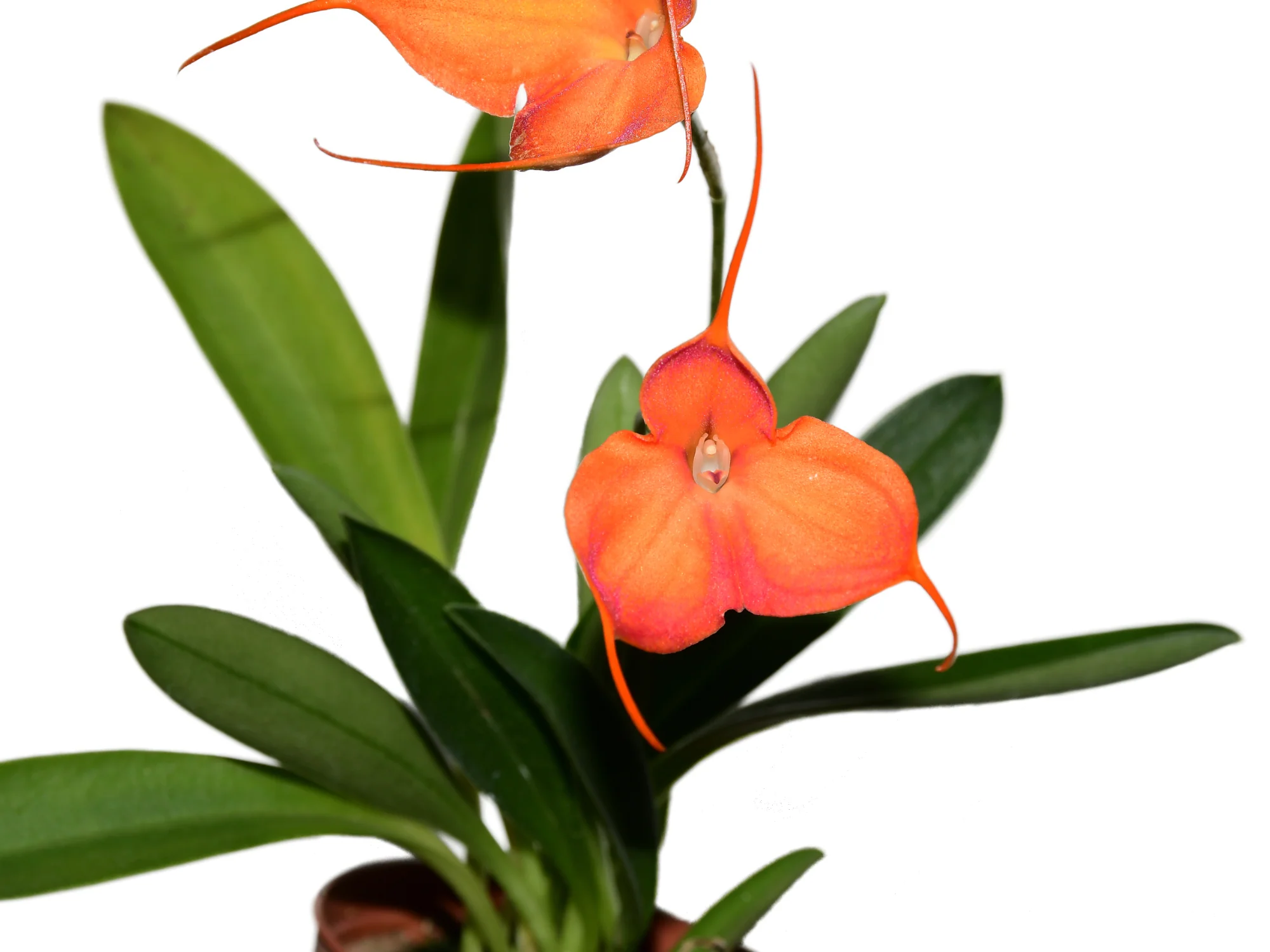
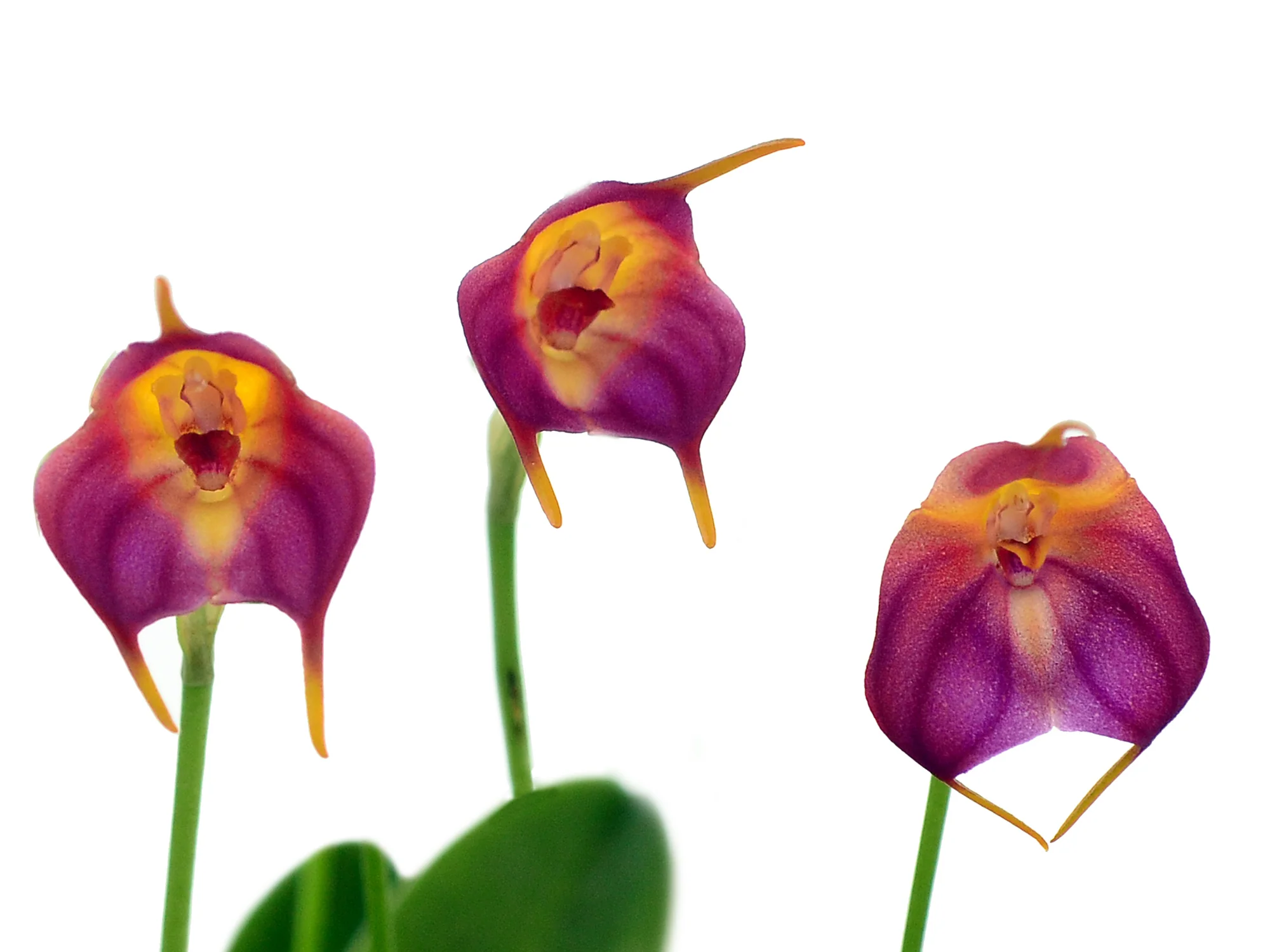
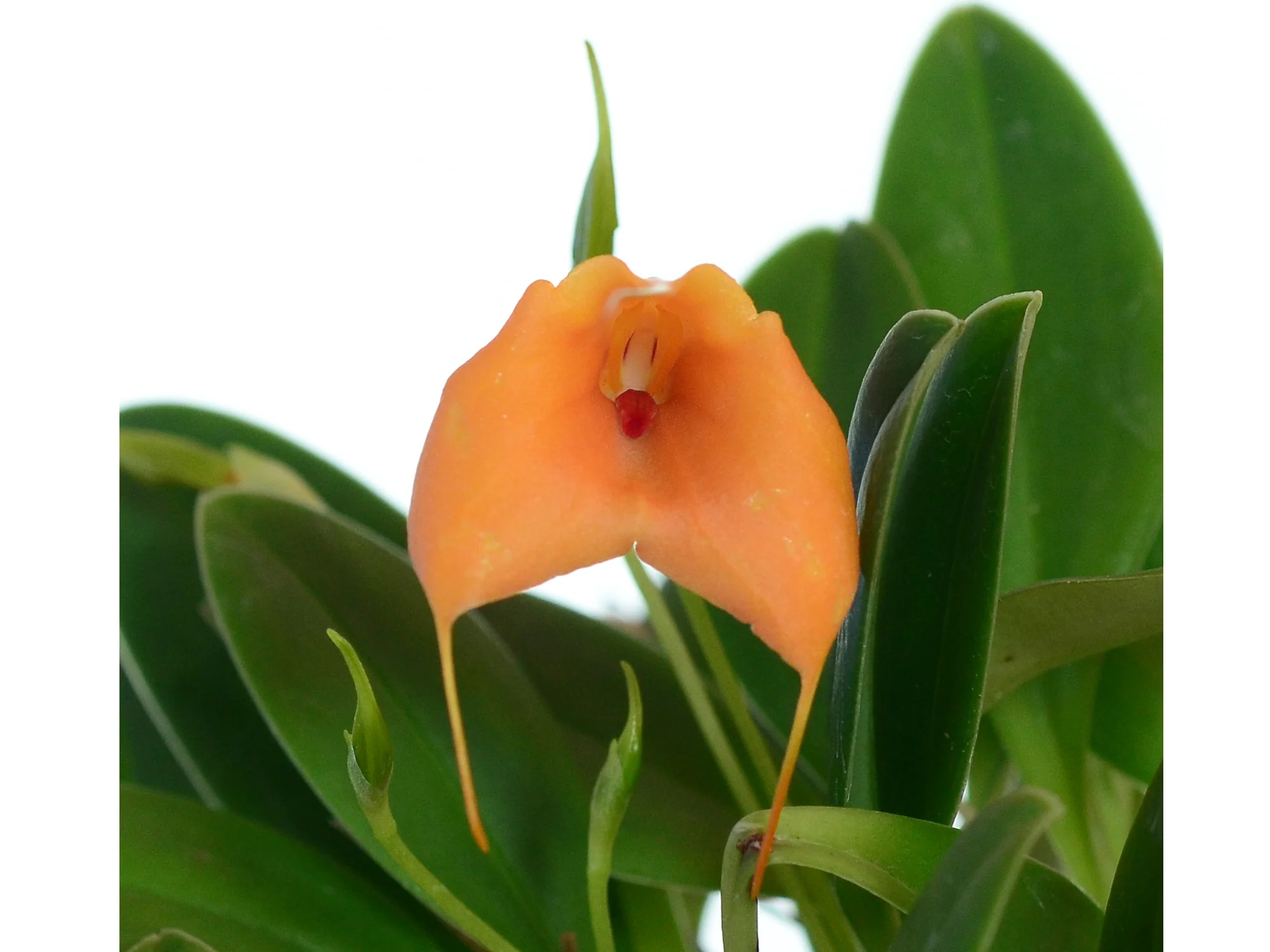
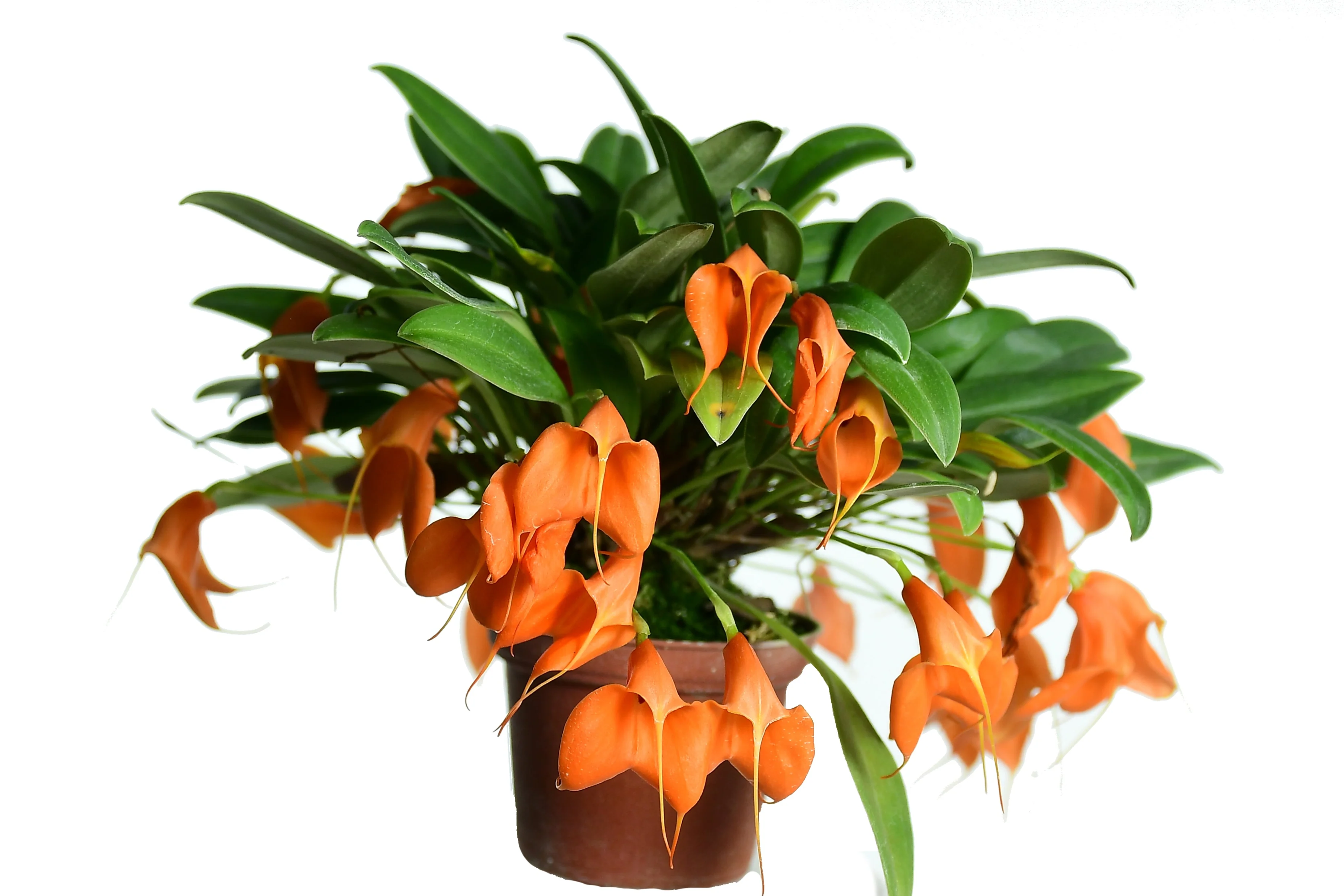
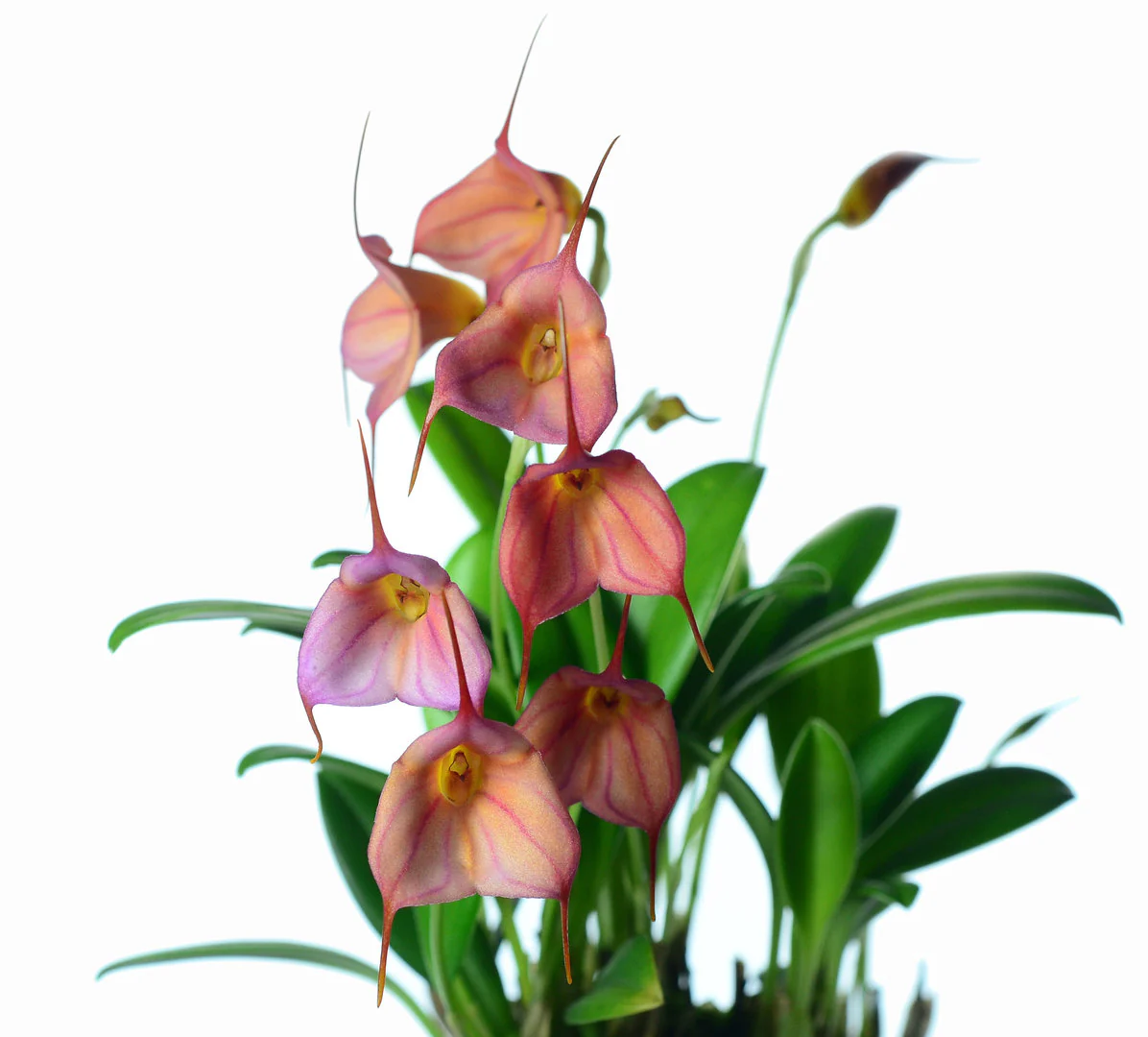
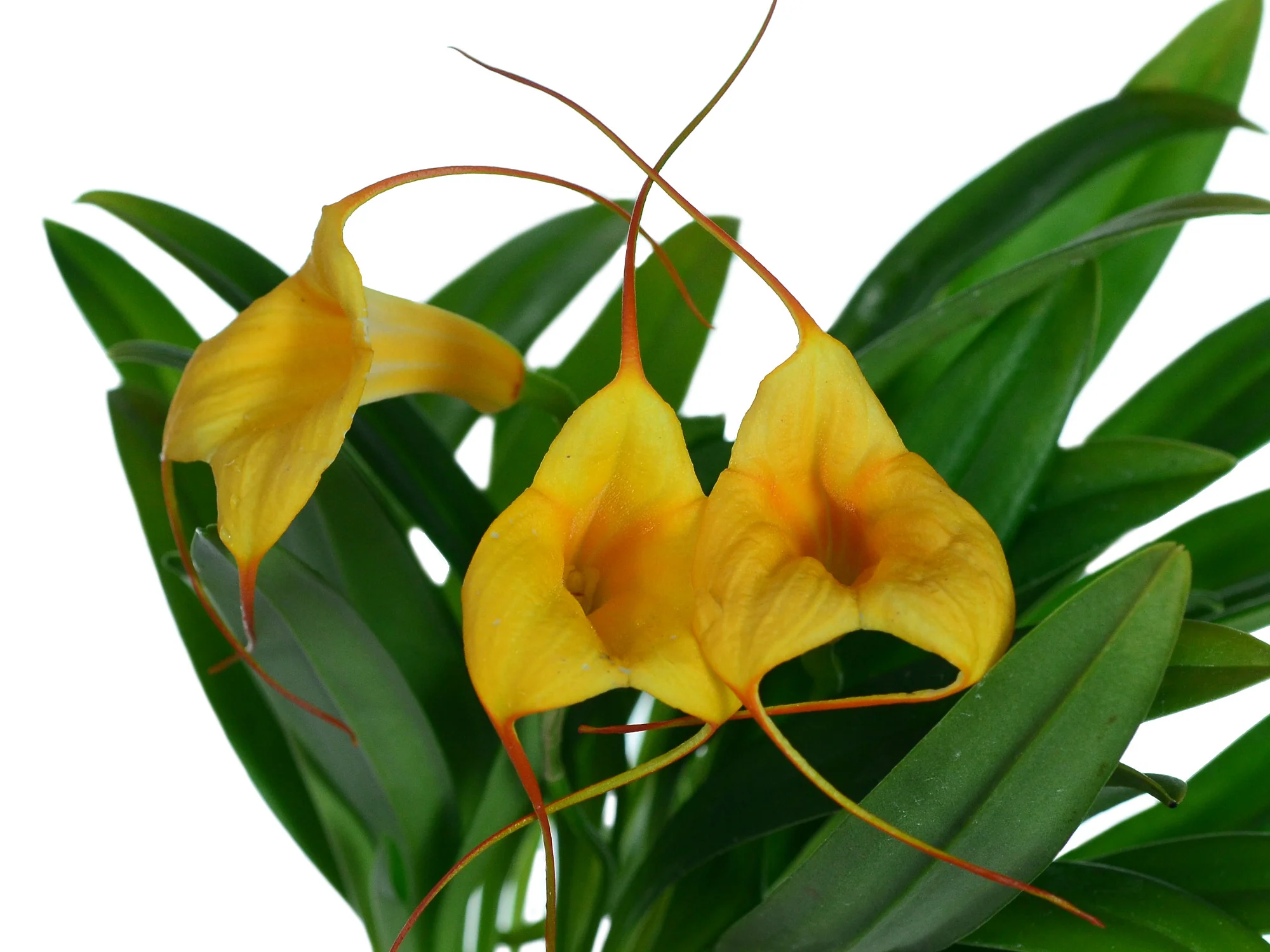
This stunning hybrid between Masd. Bella Donna and Masd. amabilis is an excellent cool-growing orchid known for its compact size and colorful, triangular blooms.
- Light: Provide medium to bright, indirect light. Direct sun must be avoided, as the thin leaves are highly susceptible to scorching and overheating.
- Temperature: Maintain cool-growing temperatures: daytime 65-75°F (18-24°C) with a crucial nightly drop to 55-60°F (13-16°C). Avoid prolonged exposure above 77°F (25°C).
- Humidity: High humidity (ideally 60-80%) is essential due to the lack of pseudobulbs. Use a humidifier and ensure good air movement to prevent fungal issues.
- Watering: The plant needs constant moisture; water when the medium is 70-80% dry. Use high-quality water (rain, RO, or distilled) and an open, fast-draining medium, as the roots must never dry out completely.
Additional Notes
The flowers are typically sequential bloomers, meaning the spike will produce multiple flowers over time; do not remove the spike until it has completely dried up. Repotting is usually necessary every 12–24 months using a fine mix like sphagnum moss or fine bark.
Product Information
Product Information
Shipping & Returns
Shipping & Returns
Description
This stunning hybrid between Masd. Bella Donna and Masd. amabilis is an excellent cool-growing orchid known for its compact size and colorful, triangular blooms.
- Light: Provide medium to bright, indirect light. Direct sun must be avoided, as the thin leaves are highly susceptible to scorching and overheating.
- Temperature: Maintain cool-growing temperatures: daytime 65-75°F (18-24°C) with a crucial nightly drop to 55-60°F (13-16°C). Avoid prolonged exposure above 77°F (25°C).
- Humidity: High humidity (ideally 60-80%) is essential due to the lack of pseudobulbs. Use a humidifier and ensure good air movement to prevent fungal issues.
- Watering: The plant needs constant moisture; water when the medium is 70-80% dry. Use high-quality water (rain, RO, or distilled) and an open, fast-draining medium, as the roots must never dry out completely.
Additional Notes
The flowers are typically sequential bloomers, meaning the spike will produce multiple flowers over time; do not remove the spike until it has completely dried up. Repotting is usually necessary every 12–24 months using a fine mix like sphagnum moss or fine bark.