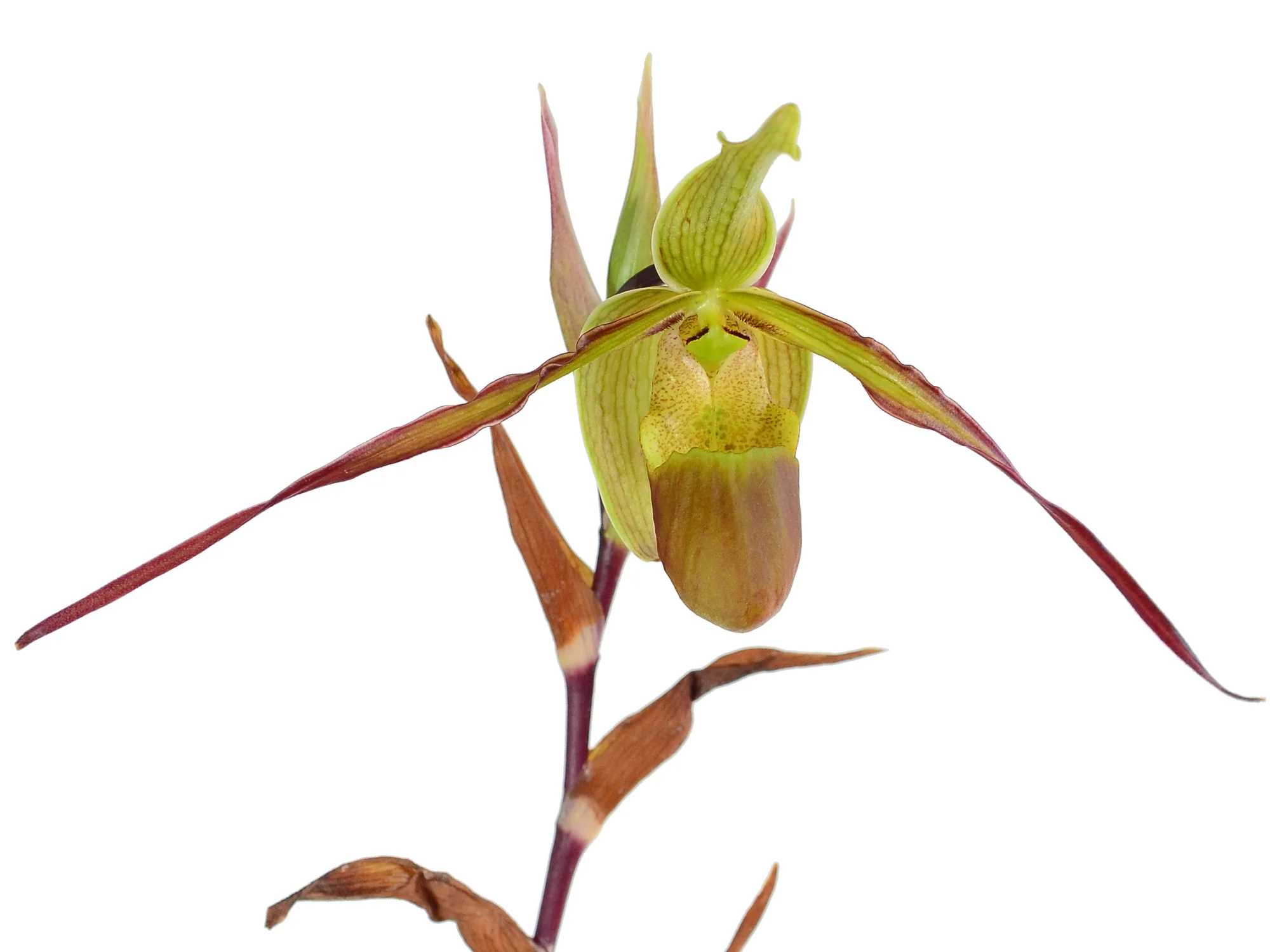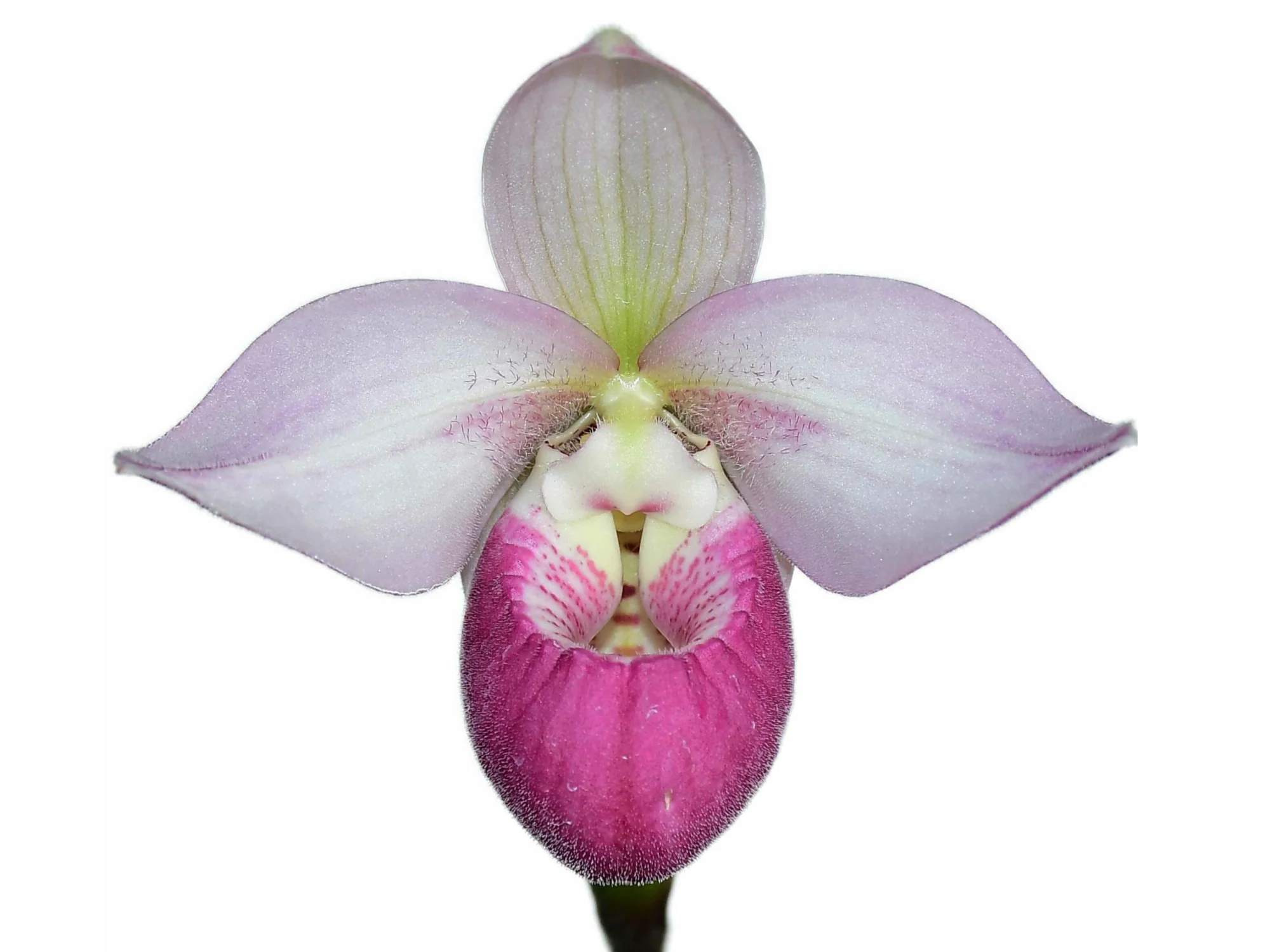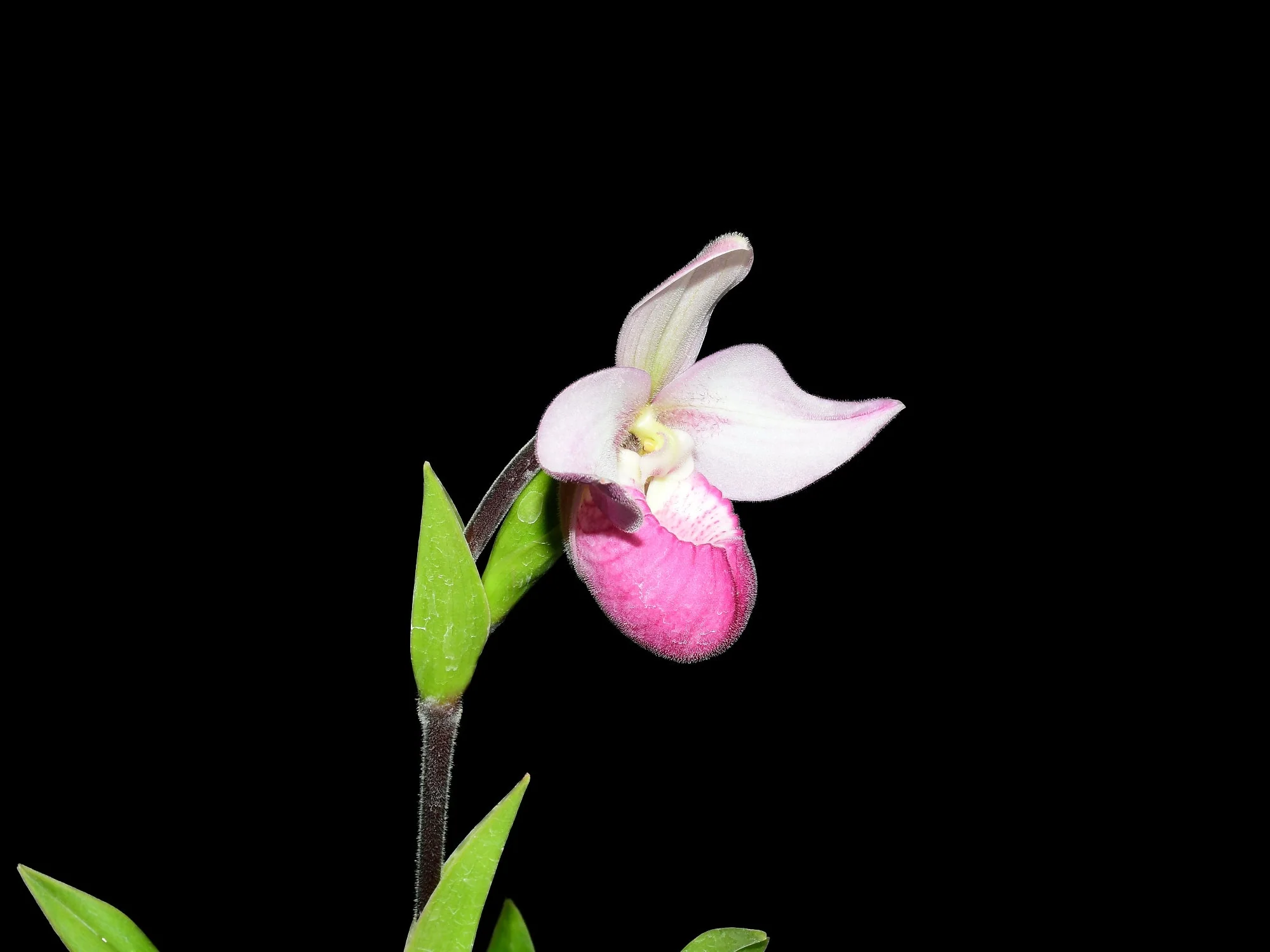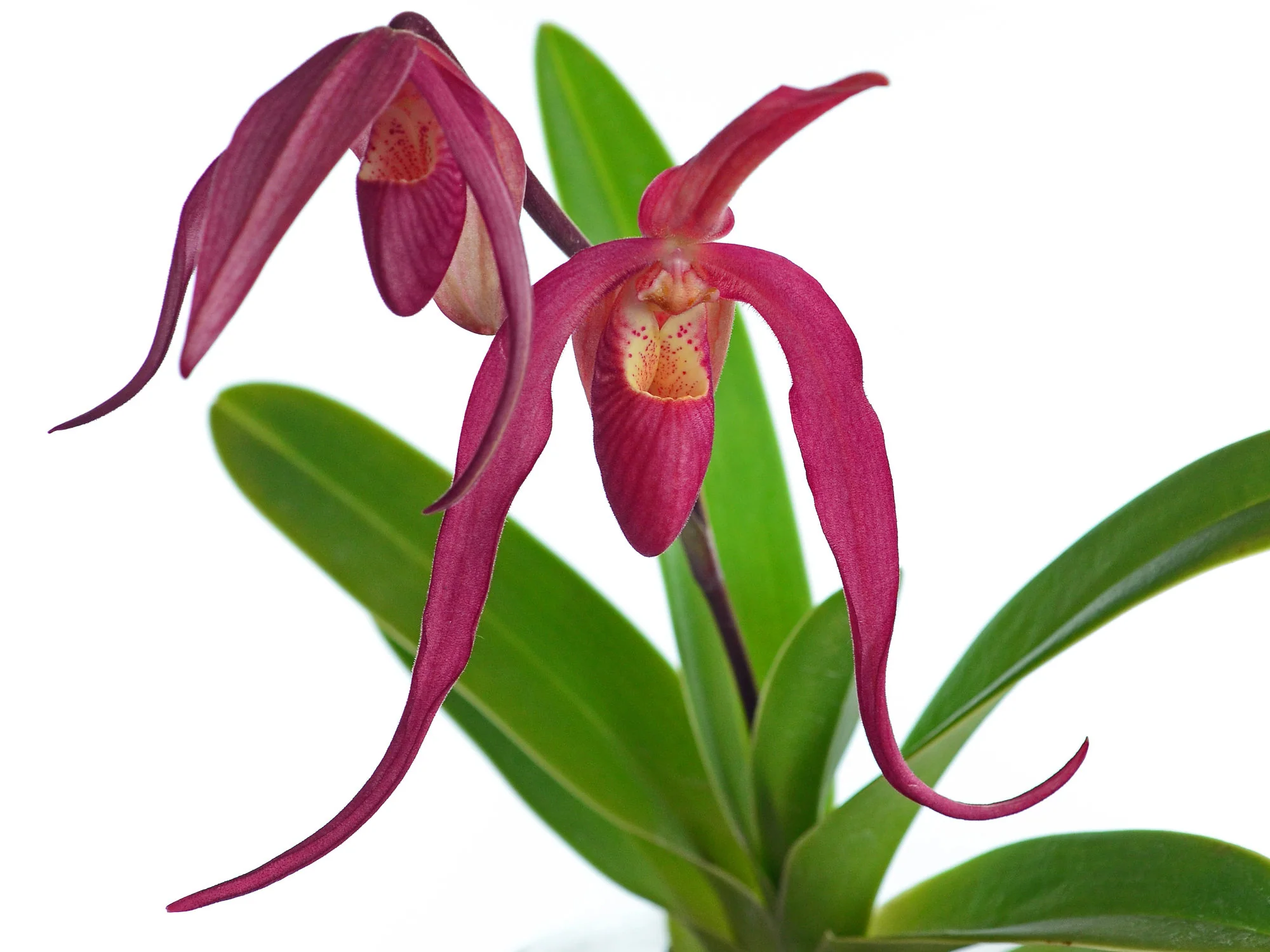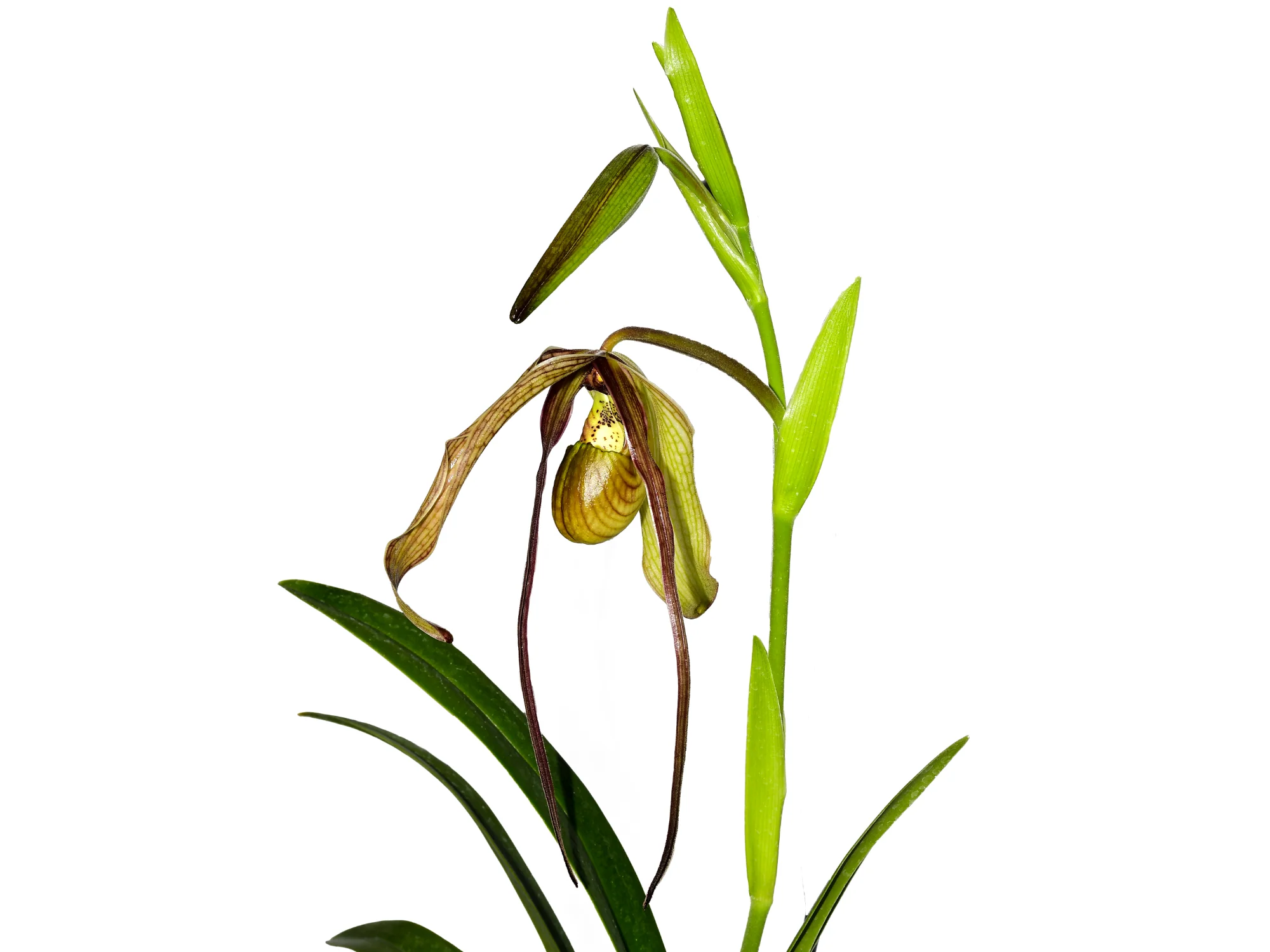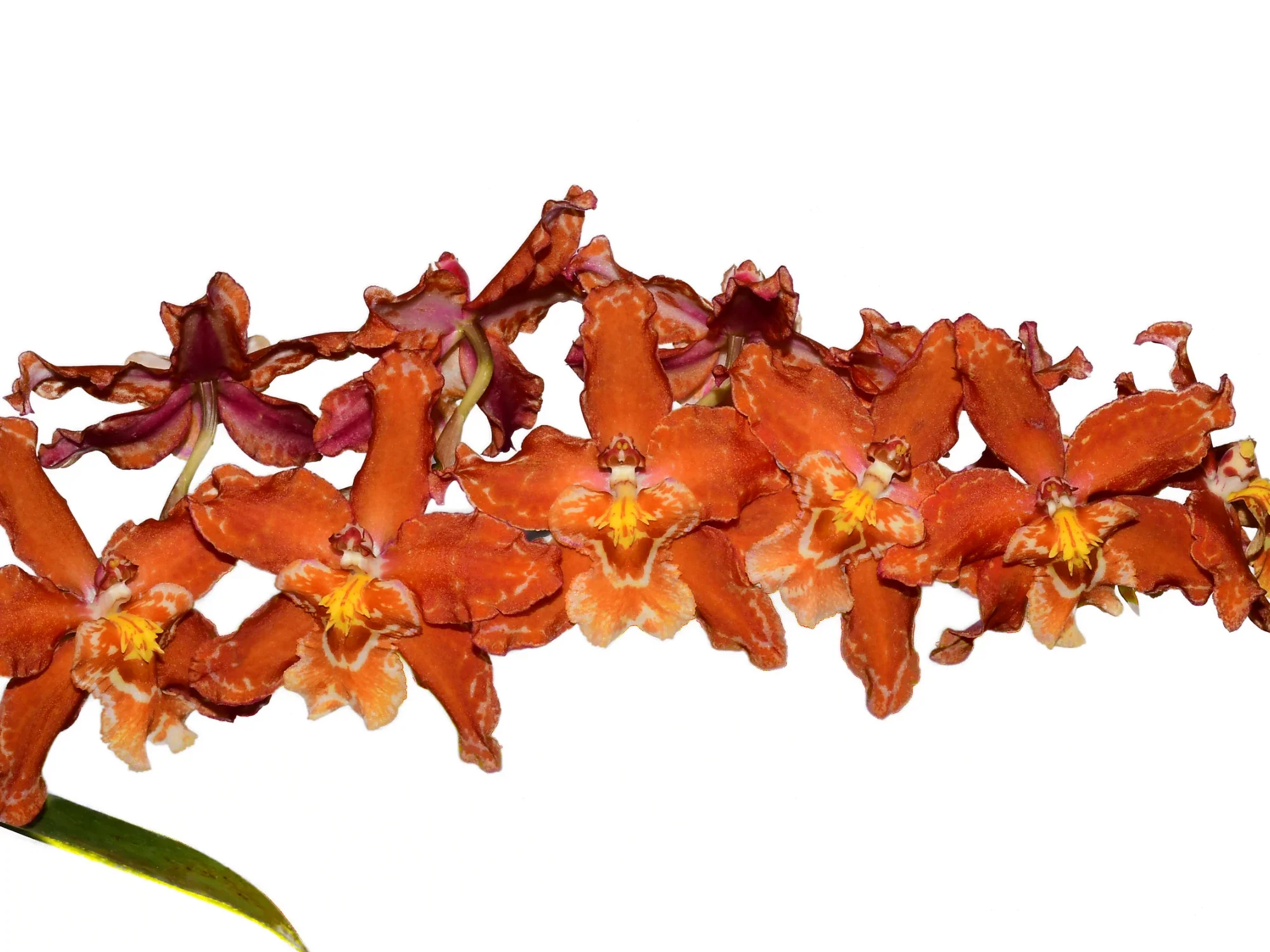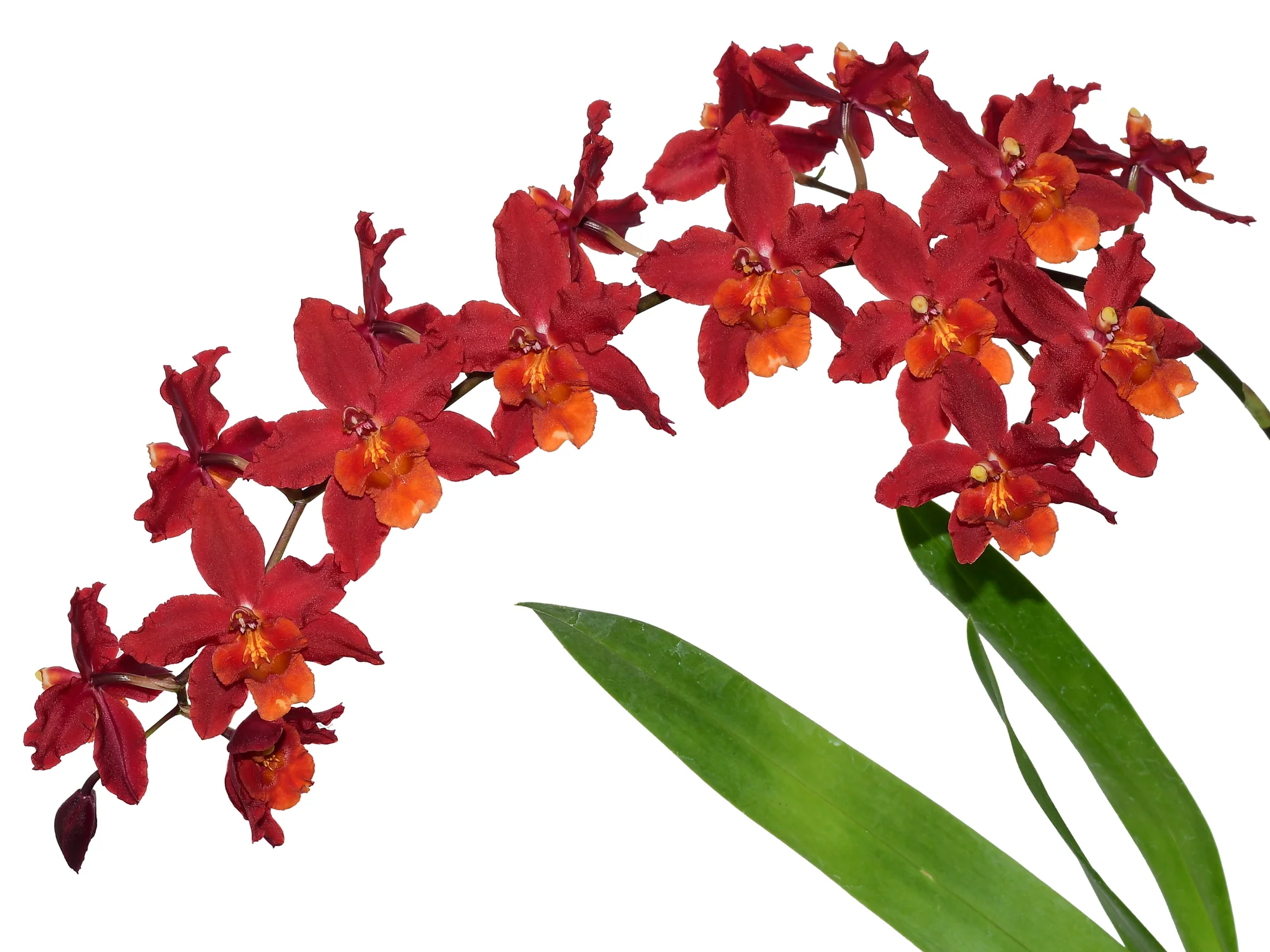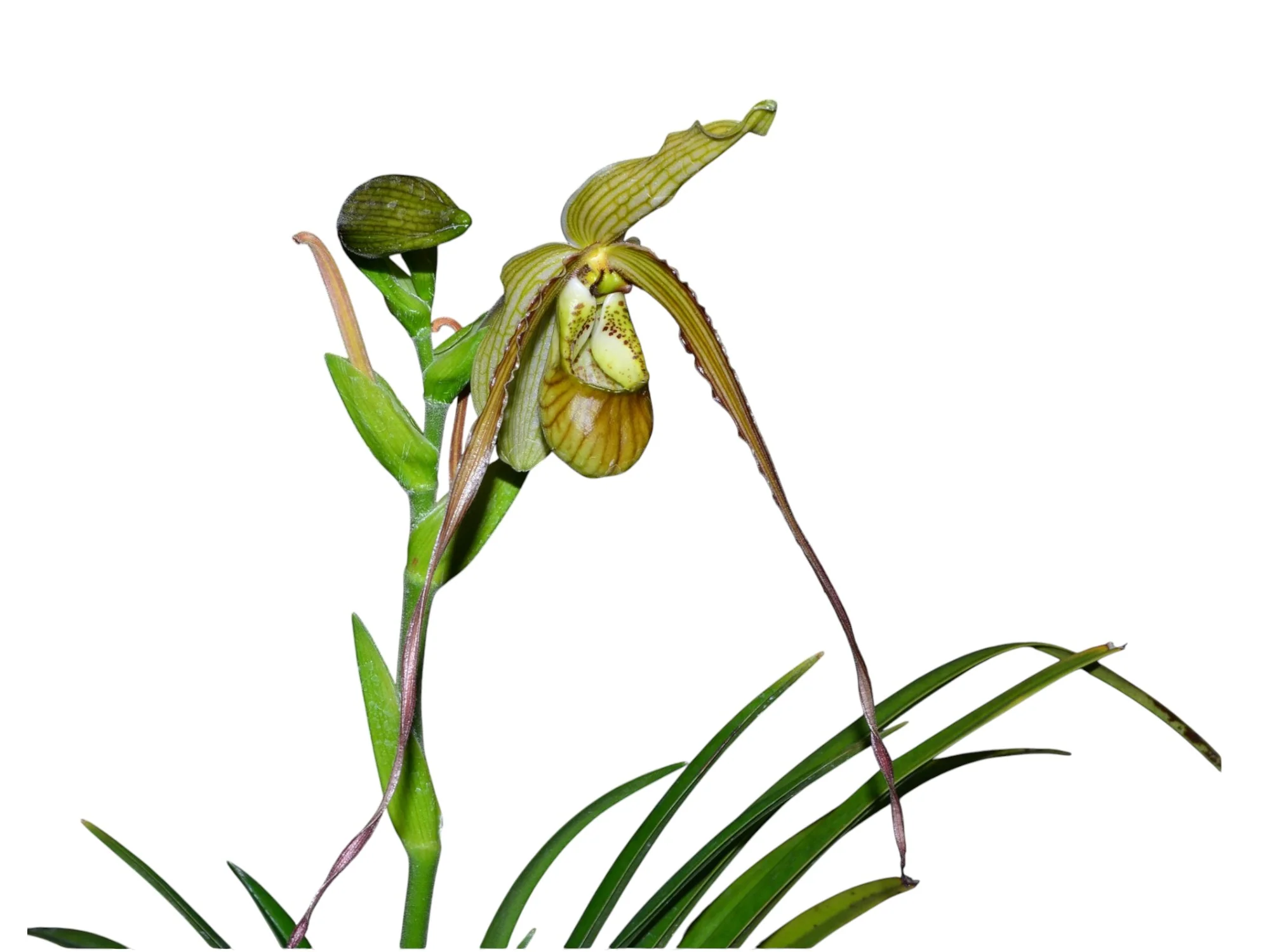
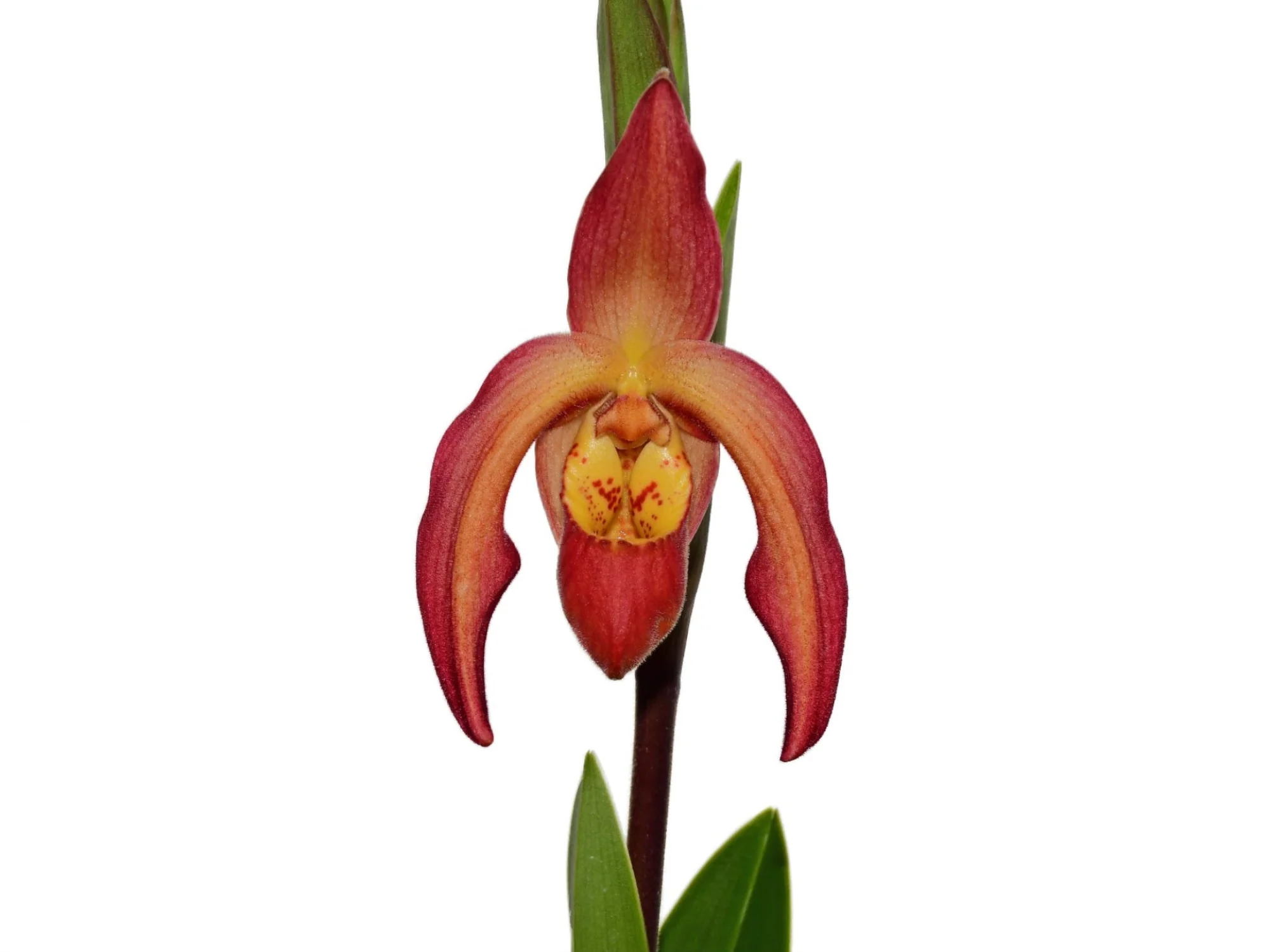
Phragmipedium Vittabess (var dalessandroi x vittatum)
This is a primary slipper orchid hybrid, resulting from the cross between the selected variety Phrag. besseae var. dalessandroi and Phrag. vittatum. It is a terrestrial/lithophytic orchid that grows in fan-shaped clumps, making it an excellent addition for collectors.
- Light: Prefers moderate, indirect light, similar to filtered light, which is essential for blooming. Avoid direct sunlight.
- Temperature: Best in intermediate temperatures, between 55-75°F (13-24°C). Requires a slight temperature drop at night to encourage flowering.
- Humidity: Requires high humidity, preferably 60-80%. Excellent air circulation is vital to prevent fungal issues.
- Watering: Demands constant moisture; its potting medium should never dry out completely. Use a well-aerated medium and keep the pot base slightly moist.
Additional Notes
This hybrid is a highly valued specimen in orchid collections for its sequential flowering and warm colors, with the besseae lineage contributing to the saturation of the red hue.
Original: $91.00
-70%$91.00
$27.30Product Information
Product Information
Shipping & Returns
Shipping & Returns
Description
This is a primary slipper orchid hybrid, resulting from the cross between the selected variety Phrag. besseae var. dalessandroi and Phrag. vittatum. It is a terrestrial/lithophytic orchid that grows in fan-shaped clumps, making it an excellent addition for collectors.
- Light: Prefers moderate, indirect light, similar to filtered light, which is essential for blooming. Avoid direct sunlight.
- Temperature: Best in intermediate temperatures, between 55-75°F (13-24°C). Requires a slight temperature drop at night to encourage flowering.
- Humidity: Requires high humidity, preferably 60-80%. Excellent air circulation is vital to prevent fungal issues.
- Watering: Demands constant moisture; its potting medium should never dry out completely. Use a well-aerated medium and keep the pot base slightly moist.
Additional Notes
This hybrid is a highly valued specimen in orchid collections for its sequential flowering and warm colors, with the besseae lineage contributing to the saturation of the red hue.